



Etsy vs Shopify in 2026 (Which Platform Fits Your Products)
Etsy vs Shopify in 2026 (Which Platform Fits Your Products)
TL;DR: Etsy gives you built-in buyer traffic but takes fees on every sale and owns the customer relationship. Shopify gives you a real brand, full customer data, and lower per-transaction fees, but you bring your own traffic. Handmade and craft sellers under $30K/year usually win on Etsy. Anything with a margin above 40%, a repeat-purchase pattern, or a category outside Etsy's craft niche usually wins on Shopify. The smartest sellers above $50K/year run both.
The Etsy vs Shopify question is the wrong question if you frame it as "which platform is better." They aren't competitors in the same lane — Etsy is a marketplace where buyers shop, and Shopify is software that powers your own store. Choosing between them is really a choice about what kind of business you want to run: a product-first hustle that lives inside someone else's traffic, or a brand-first business where every email, every customer, and every margin point is yours.
This guide walks through how the two platforms actually differ in 2026 — fees, traffic, brand control, customer data, when one beats the other, and when running both is the right move.
Etsy vs Shopify side by side
Before the long version, here's the quick comparison most sellers actually need to make a decision. The numbers below reflect 2026 fee structures and the realistic experience of operating on each platform.
| Factor | Etsy | Shopify |
|---|---|---|
| Platform type | Marketplace (you rent visibility) | Storefront software (you build a brand) |
| Monthly fee | $0 base | $39 (Basic) to $399 (Advanced) |
| Listing fee | $0.20 per listing, every 4 months | None |
| Transaction fee | 6.5% + payment processing (~3% + $0.25) | 0% on Shopify Payments; 0.5-2% otherwise |
| Offsite Ads fee | 12-15% on ad-driven sales (mandatory above $10K/year) | None |
| Built-in traffic | ~95M active buyers searching daily | Zero — you bring it |
| Customer email ownership | No (Etsy keeps it) | Yes (full list, full data) |
| Brand control | Limited (Etsy template, your shop name) | Total (custom domain, full design) |
| Best for | Handmade, vintage, craft supplies, low-volume sellers | Brand-driven, repeat-purchase, broader categories |
| Setup time | 1-2 hours to first listing | 1-2 weeks to a polished store |
| Time to first sale | Days to weeks (built-in search) | Weeks to months (you must drive traffic) |
Read that table once and most sellers already know which side they belong on. Etsy is the path of least resistance for getting a craft product in front of buyers. Shopify is the path of compounding leverage for anyone who plans to build something bigger than a shop.
What Etsy gets right
Etsy's real product isn't software — it's intent-driven traffic. About 95 million active buyers arrive in shopping mode, often with a specific style or gift in mind. You cannot replicate that warm demand with paid ads on day one of a Shopify store.
The platform is tuned to a specific aesthetic. Buyers expect handmade, vintage, or personalized items, and they tolerate longer shipping and custom orders because the context tells them they're shopping with a small maker. If your product fits, Etsy's audience is more forgiving than a cold Shopify visitor.
Three Etsy strengths matter most in 2026:
- Built-in search demand. A new shop with a well-optimized listing can land a sale in its first week, just from Etsy search. No ads, no email list, no influencer push. That's free buyer flow you'd otherwise spend $20-50 in CAC to acquire on Shopify.
- Trust by association. Etsy's brand carries credibility, especially for first-time buyers. They trust the platform's review system, return process, and dispute resolution. A standalone Shopify store has to earn that same trust from scratch.
- Fast time-to-feedback. Because traffic comes quickly, you learn what sells, what photos convert, and what titles rank within weeks. That signal loop is harder to get on Shopify when daily traffic is in the dozens.
What Shopify gets right
Shopify's strength is everything Etsy can't give you: ownership. Your domain, your brand, your customer list, your checkout, your data. It's software you operate — it doesn't take a cut of your customer relationship.
That ownership compounds. The first Shopify sale is harder than the first Etsy sale, but the hundredth Shopify sale is dramatically more valuable because you can email those customers and bring them back without paying a marketplace fee. On Etsy, every repeat customer pays the same 6.5% + processing + (often) Offsite Ads cut as a brand-new buyer.
Shopify also handles categories Etsy rejects or buries — mass-produced apparel, supplements, electronics, food, beauty, services, B2B, subscriptions. And the app ecosystem is a multiplier: Klaviyo for email, Recharge for subscriptions, Loox for reviews, Shop Pay for accelerated checkout. Etsy's "tools" stop at the listing editor. Shopify's extend across the entire customer lifecycle.
The fees comparison most sellers get wrong
Sellers love to compare Etsy's "low fees" to Shopify's "$39/month" and conclude Etsy is cheaper. The math says otherwise once volume scales. Run the numbers on a $30 product at 100 sales per month.
| Cost component | Etsy ($30 x 100 sales) | Shopify Basic ($30 x 100 sales) |
|---|---|---|
| Monthly platform fee | $0 | $39 |
| Listing fees ($0.20 x 100, every 4 months) | $5 | $0 |
| Transaction fee (6.5%) | $195 | $0 |
| Payment processing (~3% + $0.25) | $115 | $112 (Shopify Payments: 2.9% + $0.30) |
| Offsite Ads (assume 30% of sales, 12%) | $108 | $0 |
| Total monthly cost | $423 (14.1% of revenue) | $151 (5.0% of revenue) |
At $3,000/month Shopify is already cheaper. At $10,000/month the gap widens to roughly $900/month in your pocket. The break-even is around $400-500 in monthly revenue — below that, Etsy is genuinely cheaper. Above it, Etsy's percentage stack starts eating real money.
Two caveats. Etsy's "free" traffic isn't free if you account for time researching keywords and managing Offsite Ads. And Shopify's "no per-sale fee" assumes Shopify Payments — using a third-party gateway adds 0.5-2% on top of processing.
Traffic ownership: the hidden lever
Etsy buyers are Etsy's customers. You don't get their email, you can't retarget them, and Etsy forbids contacting them outside the marketplace for promotional purposes. Every time that buyer wants something else, Etsy decides whether your shop or a competitor's shows up.
Shopify flips this. Every checkout captures the buyer's email (with marketing consent), shipping address, and order history. You can build a Klaviyo flow that emails them at day 30 with a complementary product, day 90 with a restock reminder, day 180 with a loyalty offer. Shopify customer LTV typically runs 2-4x Etsy LTV for the same product because you can market to them again at zero marginal cost.
This is why Etsy sellers who scale eventually feel trapped. Your business looks healthy — $80K/year, 4-star reviews, repeat buyers — but if Etsy raises Offsite Ads fees, you have no list to fall back on. Shopify sellers at the same revenue have a 10K-person email list and a retargeting pixel with months of data. The Etsy version is more fragile by design.
Customer data and the brand question
Beyond the email list, Shopify gives you analytics Etsy will never share. Conversion rate by traffic source, cart abandonment by step, top-performing products by margin, returning customer rate, time-on-site by referrer — these numbers are the difference between guessing what's working and actually optimizing. Etsy's seller dashboard shows you views, favorites, and sales. Useful, but it's a one-way mirror — Etsy sees everything, you see fragments.
Brand control follows the same pattern. On Etsy, your shop is a page within a marketplace. The header, navigation, related listings, "you might also like" recommendations, and even the search bar are all controlled by Etsy. Buyers shop the platform, not your brand. Many never remember which Etsy seller they bought from — they just remember "I got it on Etsy."
On Shopify, the buyer lands on your domain, sees only your products, and the entire experience is yours to design. You build a brand they can recognize and recall. Three months in, customers tell their friends "I got it from [yourstore].com" — not "I got it on Shopify." That brand recall is what allows pricing power, repeat purchases, and word-of-mouth growth.
When Etsy is the right choice
Etsy beats Shopify in clearly definable cases. If three or more of these describe your business, start on Etsy and stay until volume forces a move:
- You sell handmade, vintage, or craft-supply items. This is Etsy's audience. You'll out-rank a Shopify SEO play for years on category-specific buyer intent.
- Your monthly revenue is below $3,000. Below break-even, Etsy's pay-as-you-go model beats Shopify's fixed cost.
- You don't have time or budget to drive traffic. If "marketing" sounds like a future problem, Etsy's built-in traffic is your moat.
- Your product is a one-time purchase with low repeat probability. Wedding favors, custom portraits, one-of-a-kind vintage pieces — the lifetime value advantage of Shopify doesn't apply.
- You're testing demand for a new product line. Etsy's fast feedback loop tells you whether the product has buyers in 30 days. Shopify takes 90.
Sellers in this profile do well on Etsy for years. The mistake is assuming "low fees" means low cost — it doesn't once Offsite Ads kicks in above $10K/year. But for the first few thousand dollars of monthly revenue in a craft category, Etsy is the right answer.
When Shopify is the right choice
Shopify wins when any of these conditions hold:
- You're building a brand, not just selling products. If you have a name, a story, an aesthetic, and want customers to remember you specifically — Shopify is mandatory.
- Your product has repeat-purchase potential. Skincare, supplements, coffee, candles you refill, subscription boxes, anything consumed and replaced. The ability to email past buyers is worth 30%+ of revenue over time.
- Your category is outside Etsy's craft niche. Mass-produced apparel, electronics, food, beauty, services, B2B — Etsy either rejects or buries these.
- Your margin is above 40%. You can afford the fixed Shopify cost and the customer acquisition cost, and the lifetime value will recoup it.
- You want to run paid ads, influencer partnerships, or content marketing. All of these need a destination you control. You can't run a Meta campaign that drives traffic to an Etsy listing without losing data and conversion rate.
The common mistake is sellers in this profile starting on Etsy because it's easier, then trying to migrate two years in when 70% of revenue is locked in Etsy SEO they don't control. Every month earlier you start building your own brand is a month of compounding customer data.
When running both makes sense
Above $50K/year in revenue, the answer for many sellers stops being "Etsy or Shopify" and becomes "both." Each platform plays a different role.
Etsy as a discovery channel. Use Etsy for what it's best at — putting your product in front of buyers who are searching. Treat new-to-brand Etsy sales as the top of your funnel.
Shopify as your owned channel. Use Shopify for repeat customers, brand-driven traffic, paid ads, email marketing, and bigger ticket items. This is where your real lifetime value lives.
Bridge the two with packaging and follow-up. Etsy forbids you from telling buyers to "go to my Shopify store" inside a message. But you can include a thank-you card in the package with your domain, a discount code, and an invitation to join your email list. Conversion from Etsy buyer to Shopify subscriber typically runs 8-15% with a well-designed insert. Over a year, that converts a one-time Etsy customer into a recurring Shopify customer at almost no marginal cost.
The dual-platform pattern also hedges algorithm risk. If Etsy adjusts its search or raises fees, your Shopify-side revenue continues. If your Shopify ad costs spike, your Etsy organic traffic carries you. Neither platform alone gives you that resilience.
Migration considerations if you're moving from Etsy to Shopify
Sellers moving from Etsy to Shopify face a few specific challenges. None are blockers, but ignoring them turns a 30-day migration into a 6-month revenue dip.
Etsy reviews do not transfer. They live on Etsy. Rebuild reviews on Shopify using Loox or Judge.me, and run a "first 100 customers get a discount for an honest review" campaign in your first 60 days.
Etsy SEO does not transfer. Shopify SEO is Google SEO — different game, longer timeline. Expect 3-6 months before organic search drives meaningful traffic. Bridge the gap with paid ads, email, and influencer outreach.
Don't close Etsy on day one. The smart migration runs both for 6-12 months. Etsy keeps feeding new customers while Shopify builds organic and paid channels. Once Shopify revenue exceeds Etsy revenue, decide whether to keep Etsy as a discovery channel or wind it down.
Pros and cons: Etsy
Etsy pros
- Built-in audience of ~95M active buyers
- Zero monthly cost to start
- Fast time-to-first-sale
- Trust signals come pre-built (reviews, dispute resolution)
- Strong fit for handmade, vintage, custom, digital downloads
- Mobile app and search infrastructure already drive buyer flow
Etsy cons
- 6.5% transaction fee + processing on every sale
- Mandatory 12-15% Offsite Ads fee above $10K/year
- You don't own customer email or contact data
- Limited brand control — you're a page on a marketplace
- Algorithm shifts can wipe out revenue overnight
- Categories outside craft and vintage are buried
- No advanced analytics, no real funnel data
Pros and cons: Shopify
Shopify pros
- Full ownership of customers, data, and brand
- No transaction fees on Shopify Payments
- Total brand control — your domain, your design
- Sells any legal category (no craft/vintage gatekeeping)
- Massive app ecosystem for email, reviews, subscriptions, ads
- Real analytics — funnel data, conversion sources, LTV by channel
- Customer email list is yours forever
Shopify cons
- $39-$399/month fixed cost regardless of revenue
- Zero built-in traffic — you bring all of it
- Slow time-to-first-sale (weeks to months)
- SEO and paid ads have a real learning curve
- Trust signals must be built from scratch
- App stack adds $50-300/month at scale
- Theme customization can become a rabbit hole
FAQ
Can I sell on Etsy and Shopify at the same time?
Yes, and most sellers above $50K/year do exactly that. Use the same product catalog, sync inventory with a tool like Sellbrite or QuickBooks Commerce, and let each platform play its strengths — Etsy for discovery, Shopify for brand and repeat sales.
Is Etsy cheaper than Shopify?
Below ~$500/month in revenue, yes. Above ~$3,000/month, no — Etsy's percentage stack (transaction fee + processing + Offsite Ads) typically lands at 12-16% of revenue, while Shopify Basic with Shopify Payments lands at 4-6% all-in. The break-even shifts depending on your average order value and Offsite Ads exposure.
Will my Etsy reviews transfer to Shopify?
No. Etsy reviews live on Etsy and cannot be exported. Plan to rebuild reviews on Shopify from day one using tools like Loox, Judge.me, or Yotpo, and prioritize a review-collection flow in your first 60-90 days.
Can I drive paid ads to my Etsy listings?
You can, but it's almost always a worse use of money than driving paid ads to a Shopify store. You'll lose conversion data, pay Etsy's transaction fees on top of ad spend, and never own the customer relationship. If you're spending money on ads, send the traffic to a destination you control.
Does Etsy own my designs or products?
No. You retain all intellectual property. Etsy only gets a license to display your listings. You can sell the same products on Shopify or anywhere else simultaneously.
How long until Shopify pays off?
With paid ads, 60-90 days to break even on monthly cost. With organic SEO and content, 4-9 months. Compounding kicks in once your email list crosses 1,000-2,000 subscribers and repeat purchase rate climbs above 25%.
Bottom line
Etsy and Shopify are not the same product, and the choice between them is not about features — it's about what kind of business you want. Etsy hands you traffic in exchange for fees, control, and customer ownership. Shopify hands you ownership in exchange for the work of generating your own traffic.
If you sell handmade, vintage, or craft items, are below $30K/year, and want fast feedback — start on Etsy. If you have a brand, repeat-purchase economics, margin above 40%, or any product outside Etsy's niche — start on Shopify. If you're already past $50K/year, run both and let each platform do what it's best at.
The platforms aren't enemies. They're different tools for different stages and different business models. Pick based on your products and your ambition, not based on which platform's marketing copy sounds friendlier.
Key takeaways
- Etsy is a marketplace; Shopify is software. The choice is between renting visibility and owning a brand.
- Etsy total fees land at 12-16% of revenue once Offsite Ads kicks in. Shopify Basic with Shopify Payments lands at 4-6%.
- The break-even point favors Etsy below $500/month in revenue and Shopify above $3,000/month.
- Etsy owns the customer relationship; Shopify gives you the email list, the data, and the lifetime value.
- Handmade, vintage, custom, and digital download sellers usually win on Etsy at small scale.
- Brand-driven, repeat-purchase, and non-craft categories almost always win on Shopify.
- Above $50K/year, running both platforms — Etsy for discovery, Shopify for brand and retention — beats either alone.
- Migration from Etsy to Shopify takes 3-6 months; reviews and SEO don't transfer, so plan a bridge period.
Build a link-in-bio that sells on both platforms
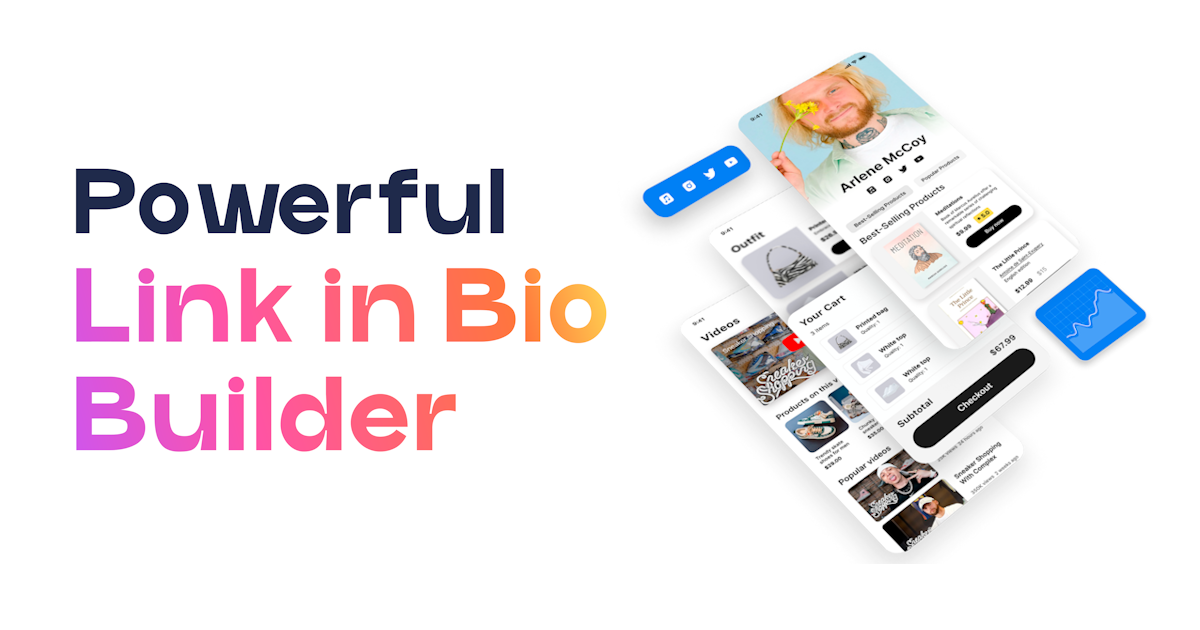
Whether you're driving Instagram traffic to your Etsy shop, your Shopify store, or both — UniLink lets you put every product, every store, and every checkout in one bio link. Add product blocks, track clicks, and route buyers to whichever platform makes sense for each item. Free to start, no platform fees on your sales.
Create Your Free Link-in-Bio Page
Join thousands of creators using UniLink. 40+ blocks, analytics, e-commerce, and AI tools — all free.
Get Started Free