



How to Build an Influencer Rate Card Page on UniLink (Get Brand Deals Faster)
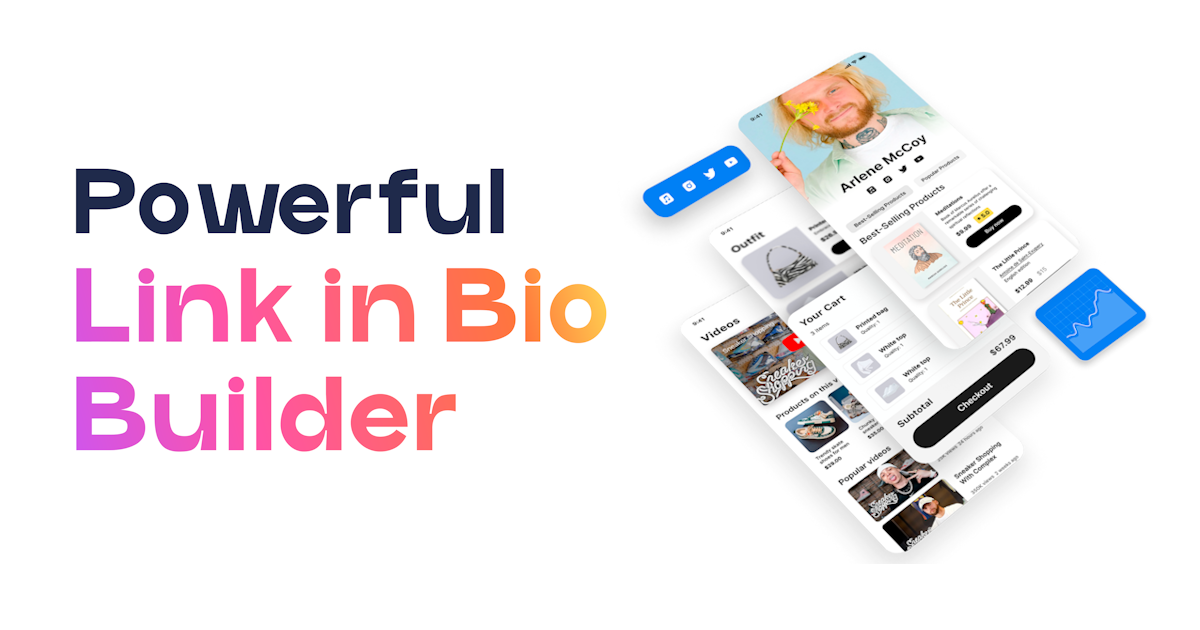
How to Build an Influencer Rate Card Page on UniLink (Get Brand Deals Faster)
Stop negotiating from scratch every time. A rate card page tells brands your packages, your prices, and your audience stats — so only serious offers land in your inbox.
Every influencer gets the "what are your rates?" DM eventually. Without a rate card, that question starts a negotiation from zero every single time — you quote a number, they counter, you explain your value, the deal stalls. A rate card page solves this by setting expectations before the conversation starts. Brands that reach out after seeing your rates are already pre-qualified. That changes the dynamic from pitching to confirming.
What a Rate Card Page Does
A rate card page is your media kit minus the fluff. It tells brand managers and marketing teams exactly what they get, what it costs, and how to book — without a back-and-forth email thread. When a brand's outreach team evaluates 20 influencers for a campaign, the one with a clear, professional rate card gets responded to first because it saves them time.
Beyond efficiency, a public or semi-public rate card positions you as a business, not a hobbyist. It signals that you take partnerships seriously, that you've thought through your packages and pricing, and that you have a process. This perception shift — from "content creator" to "media partner" — directly affects the quality and size of offers you receive.
The page also does passive work. When a brand googles "[your name] rates" or "[your niche] influencer partnerships," a well-optimized rate card page can surface in results and bring in inbound inquiries you never had to chase. That is what separates creators who are always pitching from creators who are always choosing.
How to Get Started
- Create a new page in UniLink Dashboard — log in, click "New Page," and name it "Media Kit" or "Brand Partnerships." Set a clean URL like unil.ink/yourname-media or unil.ink/yourname/rates.
- Add an Overview block with your niche and audience stats — this is the first thing brands read. Include: your content niche in one line (e.g., "Personal finance for millennials, 18–35"), total follower count across platforms, average engagement rate (likes + comments ÷ followers × 100), primary platform, and audience demographics if you have them from platform analytics.
- Screenshot your analytics and add them to a Gallery block — export your Instagram Insights, TikTok Analytics, or YouTube Studio screenshots showing reach, impressions, and audience demographics. Brands trust data they can see more than numbers in text. Update these quarterly.
- Define your packages clearly before building the pricing section — before touching the Dashboard, write out 3–5 packages on paper. Typical tiers: Story post (lowest), Single Reel or static post (mid), Dedicated video or YouTube integration (premium), Bundle (multi-platform + exclusivity). Know your prices before you build the page.
- Add a Links block linking to your social profiles — brands want to verify your follower counts themselves. Add direct links to every platform with live follower counts. This is table stakes — missing it creates friction.
- Add a Contact block or Form block for inquiries — the last step on the page should be a clear call to action: either a contact form where brands submit their brief, or a direct email address. If you use a form, ask for: brand name, campaign brief, budget range, and timeline.
- Decide on access: public, password-protected, or email-gated — public maximizes inbound but exposes your rates to competitors. Password-protected (share in direct outreach) filters for serious contacts. Email-gated (they enter their email to see the rates) grows your list while filtering time-wasters. Choose based on your goals.
How to Use It
- Build the pricing table as a structured block — use UniLink's Table or Links block to display your packages. For each package, show: package name, what's included (deliverables, usage rights, exclusivity window), turnaround time, and price range. Use ranges, not fixed prices, to leave room for negotiation.
- Add a Gallery block of past brand collaborations — include screenshots or photos of content you've created for brands. If you have case study results (e.g., "drove 2,400 link clicks for Brand X"), add those as captions. Real results are the most convincing part of any media kit.
- Add a Shoutout or Testimonials section — if a brand has given you a positive reference, add a quote from their marketing manager. Third-party validation from a recognized brand name carries enormous weight with new prospects.
- Use the Form block to pre-qualify inquiries — add fields for budget range and campaign objective. Brands who fill out a structured form are further along in their decision process than those who send a casual DM. This one change eliminates most tire-kicker conversations.
- Update prices every 6 months — as your following grows, your rates should grow with it. A rate card with prices from two years ago undervalues you. Build a habit of reviewing rates every January and July.
- Share the link in your bio and pitch decks — add your rate card URL to your Instagram bio, TikTok bio, and YouTube about page. Include it in every cold outreach email to brands. It removes the "what are your rates?" barrier from the very first touchpoint.
- Track form submissions in UniLink Analytics — see how many brands visit the page versus submit an inquiry. A high visit-to-submission gap means your packages or pricing are unclear — test simplifying the page or adding more social proof.
Key Settings Explained
| Setting | What it controls | Best practice |
|---|---|---|
| Page access (public / password / email gate) | Who can see your rates without contacting you first | Start public to build inbound; add a password gate once you're getting too many low-budget inquiries |
| Form block required fields | Which fields brands must fill in before submitting | Make budget range and campaign objective required — these are the minimum for a useful inquiry |
| Gallery image captions | Text under past brand work photos | Include the brand name and a one-line result metric if available; this is your proof of work |
| Links block icon style | Whether social platform links show as icons, text, or icon+text | Use icon+text so brand managers know at a glance which platforms you're on without guessing icon logos |
| Page SEO title | What shows in search results and link previews | Format: "[Your Name] — Influencer Media Kit | [Niche] Creator | Rates & Packages" |
How to Get the Most Out of It
Most rate cards fail because they list deliverables without communicating value. "1 Reel + 3 Stories" tells a brand what they get. "1 Reel + 3 Stories reaching 85K engaged followers in the sustainable travel niche" tells them what that's worth. Every package description should pair the deliverable with the audience context. That framing shifts the conversation from "how much does this cost" to "how much is this audience worth to us."
Engagement rate matters more than follower count to most experienced brand buyers. Include your engagement rate prominently and explain how you calculated it. A 4.2% engagement rate on 50K followers outperforms a 0.8% rate on 500K followers for most direct-response campaigns. If your engagement is strong, make it the headline number, not the follower count.
Past brand work is your most powerful sales tool. Even if you've only done three paid collaborations, include all of them with the best-available metrics. Brands are risk-averse — they want to see that other brands trusted you and got results. If you're just starting out, create spec content for brands you genuinely use and include it with a note that it's a self-initiated piece. Quality work is quality work.
Response time is a competitive advantage in influencer marketing. Brand managers often reach out to 10–15 creators simultaneously and work with whoever responds fastest. Once a brand submits your inquiry form, respond within 24 hours. A fast, professional response converts more inquiries into deals than a perfect rate card that gets a 3-day reply.
Troubleshooting Common Issues
| Problem | Likely cause | Fix |
|---|---|---|
| Brands reach out but deals don't close | Rates are unclear, packages are too complex, or there's no visible social proof | Simplify to 3 core packages, add at least one past brand case study, and include a concrete engagement rate |
| Form submissions are mostly low-budget inquiries | Rate card is too easily accessible or prices aren't communicated as premium | Add a minimum budget field to the form, or switch to a password gate that you share only after a qualifying DM exchange |
| Analytics screenshots look outdated or blurry | Screenshots were taken at low resolution or months ago | Retake screenshots at full display resolution and update quarterly; add "Data as of [Month Year]" to captions |
| Rate card link preview shows no image in emails or DMs | OG image not set in Page Settings | Upload a clean professional headshot or branded graphic as the OG image in Page Settings > Social Preview |
Pros
- Pre-qualifies brand inquiries — brands who contact you after seeing your rates are already aligned on budget
- Positions you as a professional media partner rather than a freelance content creator
- Passive inbound potential — a well-SEO'd rate card page surfaces in searches by brand marketing teams
- Form block captures structured briefs, saving you hours of back-and-forth discovery conversations
Cons
- Public rates expose your pricing to competitors and can feel rigid in negotiations
- Requires regular updates — an outdated rate card with last year's follower counts hurts more than helps
- A rate card without social proof (case studies, past brand logos) may deter brands looking for proven creators
Frequently Asked Questions
Should I list exact prices or price ranges on my rate card?
Price ranges work better in most cases. They communicate your tier while leaving room for project-specific negotiation. Use "Starting from $X" or "$X–$Y depending on usage rights and exclusivity" to anchor the conversation without boxing you in.
What audience stats should I include on my rate card?
Include total followers per platform, average reach per post (not just followers), engagement rate, top audience demographics (age, gender, location), and average monthly impressions. If you have platform-verified data, reference it explicitly — it's more credible than self-reported numbers.
Can I hide my rates and only show them after an email opt-in?
Yes. Use UniLink's Form block or a page-level email gate to require an email address before revealing the full rate card. This grows your business contact list while filtering out browsers who won't convert to paying clients.
How often should I update my rate card?
Review rates every 6 months at minimum. Update sooner if your following grows significantly (25%+), if you complete a high-profile collaboration that adds credibility, or if you consistently hear that your rates are "surprisingly affordable" — that's a signal to raise them.
What if I don't have past brand collaborations to show?
Create spec content. Choose 2–3 brands that align with your niche, create the content you would pitch them, and include it in your gallery with a label like "Concept collaboration." Quality spec content demonstrates your creative capability and is more convincing than an empty gallery.
Key Takeaways
- A rate card page pre-qualifies brand inquiries — you stop negotiating from scratch every time and only talk to brands already aligned on budget.
- Lead with your engagement rate and audience demographics, not just follower count — these are the numbers brand buyers actually evaluate.
- Past brand work with result metrics is your strongest sales asset; if you're just starting, spec content demonstrates capability.
- Use a Form block to capture structured briefs — it filters serious brands from casual inquiries and eliminates discovery-call friction.
- Access control (public, password, email gate) lets you tune the inbound quality as your following grows.
Ready to turn your audience into brand deals?
Build your influencer rate card page on UniLink and start attracting brand partnerships that match your value. Set your packages, show your proof, and let brands come to you.
Get Started FreeCreate Your Free Link-in-Bio Page
Join thousands of creators using UniLink. 40+ blocks, analytics, e-commerce, and AI tools — all free.
Get Started Free