



How to Connect Google Analytics to UniLink (Track Your Page Traffic)
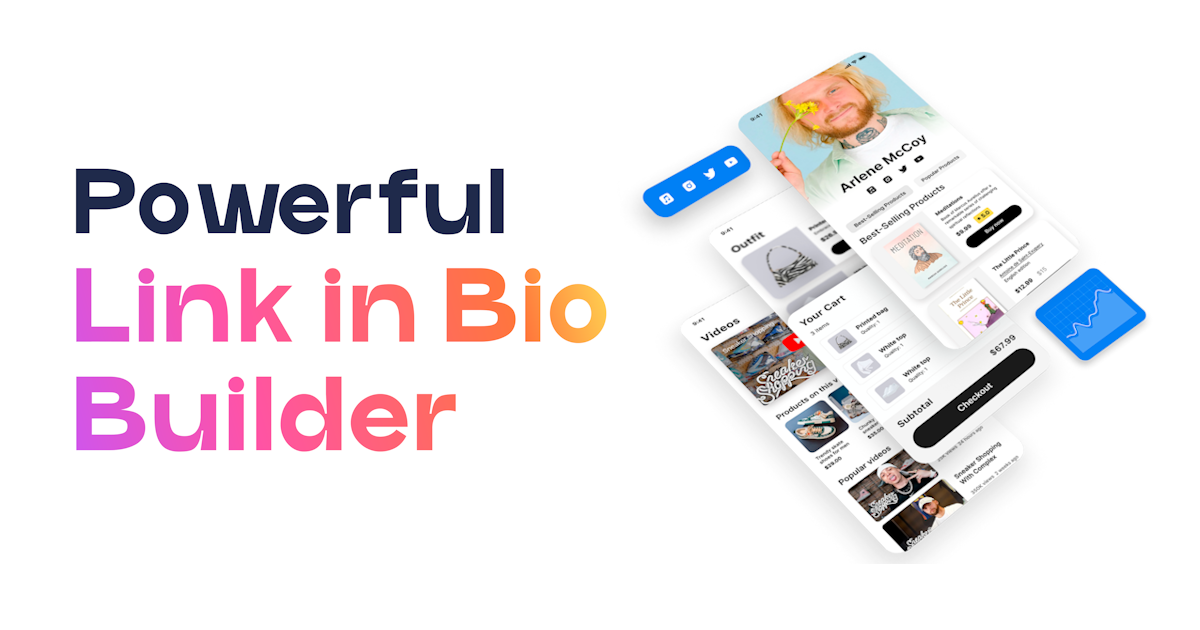
How to Connect Google Analytics to UniLink (Track Your Page Traffic)
Add your GA4 Measurement ID to UniLink in under two minutes and start seeing exactly where your visitors come from, how long they stay, and which links they click.
What this article covers: How to find your GA4 Measurement ID, paste it into UniLink's Analytics settings, verify tracking is working, and use the data to improve your page performance.
- Connect GA4 to UniLink via Dashboard → Settings → Analytics → Google Analytics
- Track page views, sessions, traffic sources, and custom events for button clicks and purchases
- Use audience data and conversion goals in GA4 to understand which content drives action
Every time someone visits your UniLink page, data disappears unless you are capturing it. Google Analytics 4 is the most widely used free analytics platform in the world, and connecting it to UniLink takes less time than it takes to read this introduction. Once connected, your GA4 property receives a stream of session data — traffic sources, device types, geographic locations, time on page — all tied to the single URL you share everywhere. If you run ads, create content, or sell products, that data is what tells you whether any of it is working.
What Google Analytics Integration Does
Connecting Google Analytics to UniLink places the GA4 tracking snippet on your public UniLink page automatically. Every page view is logged as a page_view event in GA4, complete with the referrer URL, UTM parameters from your links, and visitor metadata including country, device type, and browser. You do not need to touch any code or install a plugin — UniLink handles the snippet injection as soon as you save your Measurement ID.
Beyond passive page view tracking, UniLink sends custom events to GA4 when visitors interact with your page. A visitor clicking a link block triggers a click event. A visitor completing a purchase through your store block triggers a purchase event. A visitor submitting a form triggers a form submission event. These events appear in GA4's Events report and can be marked as conversions so you can build goals and measure the exact actions that matter to your business.
GA4's audience features work with your UniLink traffic out of the box. Once you have a few weeks of data, you can build audiences based on visitors who clicked a specific product link, visited from Instagram, or spent more than 30 seconds on your page. These audiences can be pushed to Google Ads for remarketing — turning your UniLink page into the entry point for a full ad retargeting funnel without any additional tracking setup.
How to Get Started With Google Analytics
- Create a GA4 property if you do not have one — go to analytics.google.com, click Admin, then Create Property. Select Web as the platform and enter your UniLink page URL (e.g., unil.ink/yourname) as the website URL during setup.
- Find your Measurement ID — in GA4 Admin, go to Data Streams under your property, click your web stream, and copy the Measurement ID. It starts with G- followed by ten alphanumeric characters (e.g., G-XXXXXXXXXX).
- Open Analytics settings in UniLink Dashboard — log in to app.unilink.us, go to Settings in the left sidebar, then click the Analytics tab.
- Paste your Measurement ID into the Google Analytics field — find the Google Analytics section, paste your G-XXXXXXXXXX ID into the input field, and click Save.
- Verify the connection is live — open your public UniLink page (unil.ink/yourname) in a separate browser tab, then return to GA4 and open Reports → Realtime. Your own visit should appear within 30 seconds confirming the snippet is firing correctly.
How to Use Google Analytics With UniLink
- Check the Acquisition report to understand traffic sources — in GA4, go to Reports → Acquisition → Traffic Acquisition to see which channels (organic search, direct, Instagram, TikTok, paid) are driving visitors to your UniLink page. Use this to double down on what is working.
- Use UTM parameters on every link you share — when posting your UniLink URL on different platforms, append UTM parameters (e.g., ?utm_source=instagram&utm_medium=bio). GA4 reads these automatically and breaks down traffic by source even when the referrer is not passed correctly by the platform.
- Mark key events as conversions — in GA4, go to Configure → Events, find events like purchases or form submissions that UniLink sends, and toggle Mark as Conversion. These now appear in your Conversions report and can be used as bidding goals in Google Ads.
- Build an audience for remarketing — in GA4, go to Configure → Audiences and create a new audience based on visitors to your UniLink page. Link your GA4 property to Google Ads and use this audience for remarketing campaigns targeting people who have already seen your page.
- Review the Engagement report weekly — GA4's Engagement report shows average session duration and engaged sessions for your page. A short session time combined with low conversions signals that your page content or calls to action need revision.
Key Settings
| Setting | What It Does | Recommended |
|---|---|---|
| Measurement ID (G-XXXXXXXXXX) | Links your UniLink page to the correct GA4 property so all events are sent to the right account | Use the Measurement ID from a dedicated GA4 property for your UniLink page — not a property shared with another website, to keep data clean |
| Enhanced Measurement | GA4 feature that automatically tracks scrolls, outbound clicks, and video engagement without extra code | Enable in GA4 Data Stream settings — gives you richer behavioral data from UniLink visitors with no additional setup |
| Data Retention | How long GA4 stores event-level data for exploration reports | Set to 14 months (maximum available on the free tier) in GA4 Admin → Data Settings → Data Retention |
| Conversion Events | GA4 events flagged as business-critical actions such as purchases or form submissions | Mark at least one UniLink event (purchase or click on primary CTA) as a conversion so you can measure goal completion rate |
| Google Ads Linking | Connects your GA4 property to Google Ads so audiences and conversions can be imported | Link if you run any paid traffic — enables import of GA4 conversions into Google Ads for smarter bidding |
Get the Most Out of Google Analytics
The biggest mistake creators make is connecting GA4 and then ignoring the data for months. Set a recurring reminder to review your GA4 Acquisition report every Monday. You are looking for changes in traffic sources — if Instagram referrals suddenly drop while TikTok referrals spike, that tells you where your content is getting traction and where to invest your time this week. The data is only useful if you act on it regularly.
UTM parameters are the single highest-impact change you can make to your analytics setup. When you post your UniLink URL on Instagram, use a UTM link like unil.ink/yourname?utm_source=instagram&utm_medium=bio. When you include it in an email newsletter, use utm_source=email. GA4 reads these parameters and attributes the traffic correctly, even on platforms that strip referrer information. Without UTMs, a large percentage of your social traffic shows up as "direct" and you cannot tell which platform is actually driving visitors.
Connect GA4 to Google Search Console if you want to see organic search performance alongside your behavioral data. In GA4 Admin, go to Product Links → Search Console Links and connect your property. You will then see which search queries are sending visitors to your UniLink page, how those visitors behave once they arrive, and which queries have the best engagement rates. This combination gives you a complete picture from search impression to on-page action.
Use GA4's Explore reports to build custom analyses that the standard reports do not show. A simple funnel exploration can show how many visitors land on your UniLink page, how many scroll past the fold, how many click a product link, and how many complete a purchase. This funnel view makes it obvious exactly where visitors are dropping off so you know which part of your page to optimize first.
Troubleshooting
| Problem | Cause | Fix |
|---|---|---|
| No data appearing in GA4 Realtime after saving the Measurement ID | The Measurement ID was entered incorrectly, or the settings were not saved properly | Return to Dashboard → Settings → Analytics, verify the ID starts with G- and contains no extra spaces, re-save, then hard-refresh your UniLink public page and check GA4 Realtime again |
| Traffic shows as "direct" even though visitors are coming from Instagram | Instagram's in-app browser strips the referrer header so GA4 cannot identify the source | Always append UTM parameters to the URL you share on Instagram: add ?utm_source=instagram&utm_medium=bio to your UniLink URL so the source is captured explicitly |
| Events appear in GA4 but conversions are not recording | The relevant events have not been marked as conversions in GA4 | Go to GA4 Configure → Events, find the event you want to count as a conversion, and toggle Mark as Conversion to on |
| GA4 data shows very high bounce rate compared to UniLink's native analytics | GA4 defines engagement differently — a session with no second interaction within 10 seconds counts as non-engaged | Enable Enhanced Measurement in your GA4 Data Stream to capture scroll events and outbound clicks, which increase the engaged session count and give a more accurate picture of visitor behavior |
Pros
- Free, powerful analytics with real-time reporting and detailed audience segmentation
- UTM parameter support gives accurate attribution even when platform referrer headers are stripped
- Custom event tracking for purchases, clicks, and form submissions turns your page into a measurable conversion funnel
- Native integration with Google Ads enables remarketing audiences built from UniLink visitors
Cons
- GA4's interface has a steep learning curve compared to simpler analytics tools — building custom reports takes time to master
- Data sampling in free GA4 can affect accuracy on high-traffic pages when running complex Explore reports
- Ad blockers and browser privacy settings cause some visitors to be excluded from GA4 data, creating an undercount
Frequently Asked Questions
Can I connect GA4 to UniLink on the free plan?
Yes. The Google Analytics integration is available on all UniLink plans including the free tier. You only need a Google account and a GA4 property, both of which are free to create. Paid plans unlock additional UniLink analytics features like click heatmaps and A/B testing, but GA4 integration itself has no plan restriction.
Will Google Analytics track visitors on my custom domain?
Yes. If you have connected a custom domain to your UniLink page (available on Starter and above), the GA4 snippet fires on that domain just as it does on unil.ink/username. The Measurement ID you enter applies to whichever URL visitors use to reach your page.
Can I use both Google Analytics and UniLink's built-in analytics at the same time?
Yes. UniLink's native analytics and your GA4 property run independently and do not interfere with each other. Native UniLink analytics show click counts and simple traffic data directly in your Dashboard, while GA4 provides deeper behavioral analysis. Using both gives you the quickest view in the Dashboard plus the full depth of GA4 when you need it.
How do I track which specific link on my UniLink page gets the most clicks?
UniLink automatically sends click events to GA4 when visitors interact with link blocks. In GA4, go to Reports → Engagement → Events and find click events. The event parameters include the link label and destination URL, so you can filter by specific links. For more detail, use GA4's Explore report to build a breakdown of clicks by link destination.
Does connecting GA4 slow down my UniLink page?
The GA4 snippet loads asynchronously, meaning it does not block your page content from rendering. The performance impact on page load time is minimal — typically less than 50ms. UniLink loads the GA4 snippet with the same best-practice async loading pattern that Google recommends for direct implementations.
Key Takeaways
- Add your GA4 Measurement ID (G-XXXXXXXXXX) in Dashboard → Settings → Analytics → Google Analytics and save — tracking is live immediately.
- Use UTM parameters on every link you post to avoid traffic being misclassified as direct in GA4.
- Mark purchase and form submission events as conversions in GA4 to measure your page's actual business impact.
- Review the Acquisition report weekly to identify which platforms are driving the most and best-quality visitors.
- Create a dedicated GA4 property for your UniLink page to keep data clean and easy to share with brand partners.
Ready to understand your UniLink traffic?
Connect Google Analytics to your UniLink page today and start making decisions based on real visitor data — not guesses.
Get Started FreeCreate Your Free Link-in-Bio Page
Join thousands of creators using UniLink. 40+ blocks, analytics, e-commerce, and AI tools — all free.
Get Started Free