



How to Connect Gumroad to UniLink (Sell Your Gumroad Products From Your Link-in-Bio)
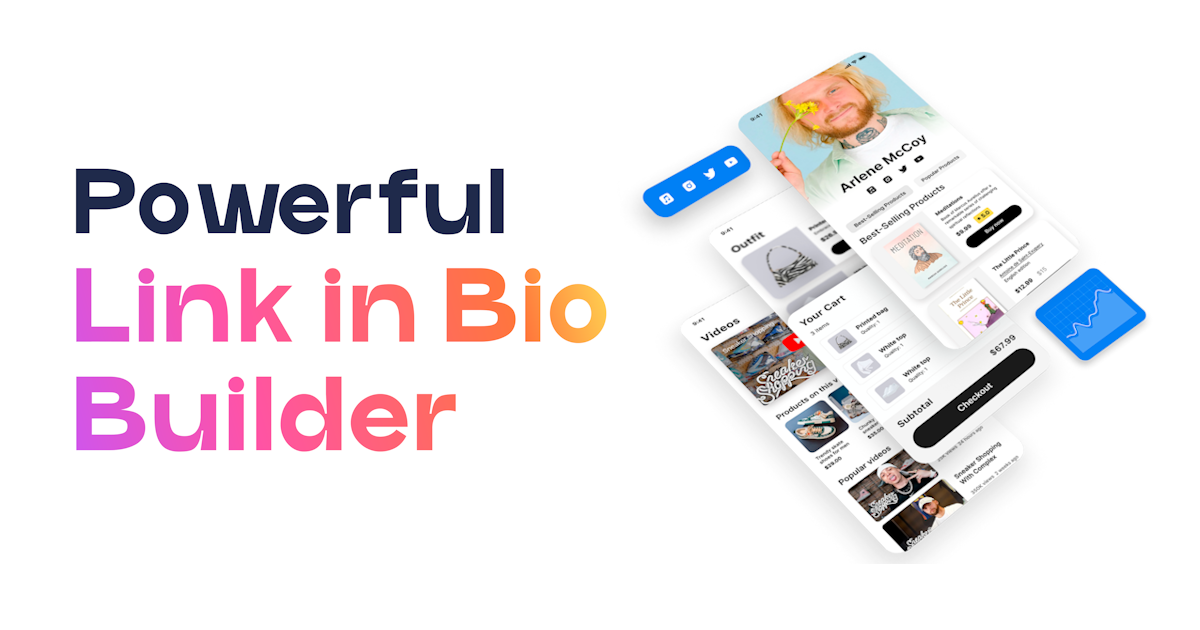
How to Connect Gumroad to UniLink (Sell Your Gumroad Products From Your Link-in-Bio)
Add your Gumroad products directly to your UniLink page so visitors can discover and buy your digital products without ever leaving the experience your content sent them to.
What this article covers: How to add Gumroad products to UniLink using the Product block, configure the display, and decide when Gumroad versus UniLink's native product blocks is the right choice for your workflow.
- Add Gumroad products via Dashboard → Add Block → Product → paste Gumroad product URL → configure → save
- Visitors click through to Gumroad's checkout — product image, price, and description are displayed on UniLink
- UniLink's native product blocks are an alternative if you want checkout handled entirely within UniLink
Gumroad is one of the most popular platforms for selling digital products — eBooks, templates, presets, courses, and software — because it handles the creator's entire transaction with minimal setup. If your Gumroad store is where your products live, your UniLink page is where your audience lands first. Connecting the two means visitors who tap your link in bio see your products immediately, with their cover images and prices, and can click through to Gumroad's checkout in one tap. This guide walks through the setup and explains when this approach makes sense versus using UniLink's built-in product system.
What Gumroad Integration Does
UniLink's Product block can display any Gumroad product on your page by using that product's public URL. When you paste a Gumroad product URL into the block, UniLink reads the product's title, cover image, price, and short description from the Gumroad page and populates the block automatically. The product card appears on your UniLink page looking native to your design — styled to match your chosen theme and colors rather than looking like an embedded third-party widget. Visitors see what looks like a product listing built into your page, not an external link.
When a visitor clicks the product on your UniLink page, they are taken directly to that product's Gumroad checkout page. Gumroad handles the payment, sends the download or access link, and manages any refunds or license questions. UniLink is not involved in the transaction — it is purely a display and discovery layer. Your Gumroad account receives the revenue, Gumroad's analytics record the sale, and your Gumroad dashboard shows the customer. This makes the integration ideal for creators who are already set up on Gumroad and do not want to migrate their product catalog or rebuild their checkout flow.
You can add multiple Gumroad products to a single UniLink page, mixing them with other content blocks — an about section, social links, a newsletter sign-up, or a YouTube embed. This flexibility means your UniLink page can function as a full creator hub where someone who just discovered you can learn who you are, follow you on social media, and buy your products in a single scroll rather than having to visit multiple separate pages. Each Gumroad product appears as its own block with independent styling and click tracking.
How to Get Started With Gumroad on UniLink
- Copy the URL of your Gumroad product — go to your Gumroad dashboard, open the product you want to feature, and copy the public product page URL (e.g., yourname.gumroad.com/l/product-slug or gumroad.com/l/product-slug).
- Open your page editor in UniLink Dashboard — log in to app.unilink.us, navigate to your page in the Dashboard, and click Edit Page to open the page editor.
- Add a Product block — click the + Add Block button, find the Product block in the block library, and select it. A new product block appears on your page.
- Paste your Gumroad product URL — in the block settings, paste the Gumroad URL into the Product URL or Link field. UniLink will attempt to fetch the product details automatically. Confirm the title, image, and price are correctly displayed in the preview.
- Configure the block display and save — adjust the button label (e.g., "Buy Now," "Get the Template," "Download Free Preview"), image display, and any description text you want to show. Click Save. The product now appears on your live UniLink page and visitors can click through to Gumroad checkout immediately.
How to Use Gumroad Products on UniLink
- Feature your best-selling product prominently — place your highest-converting Gumroad product as the first product block on your page, above the fold on mobile. Visitors who know what they are looking for find it immediately without scrolling, which increases click-through rates.
- Write a custom description for each product block — the auto-fetched description from Gumroad may not be ideal for a quick-scan link-in-bio context. Write a shorter, punchier one-line description that communicates the core value in under ten words. "50 Lightroom presets for travel photographers — $15" outperforms a three-sentence product description on a mobile screen.
- Update product blocks when you run Gumroad promotions — if you add a discount to a Gumroad product, update the product block title or button text on UniLink to reflect the promotion (e.g., change the button to "Get 30% Off Today"). The price shown will update via the Gumroad URL but a visible label change creates additional urgency.
- Add multiple products in a bundle layout — use UniLink's product grid or list display to show two to four Gumroad products together. Group them by category (e.g., "Templates," "Courses") using section heading blocks between groups so visitors can orient themselves quickly.
- Track Gumroad sales attributed to UniLink — Gumroad provides referrer data for sales in its dashboard. Sales where the referrer shows unil.ink or your custom UniLink domain are attributable to your UniLink page. Use this data to measure how much revenue your link-in-bio is directly driving from your Gumroad catalog.
Key Settings
| Setting | What It Does | Recommended |
|---|---|---|
| Product URL | The Gumroad product page URL that UniLink displays and links to when visitors click | Use the direct product URL (yourname.gumroad.com/l/slug) rather than a shortened or redirected URL for reliable auto-fetching of product details |
| Button Label | The text on the call-to-action button visitors click to go to Gumroad checkout | Use action-specific labels like "Get the Template," "Download Now," or "Enroll for $X" instead of generic "Buy Now" — specificity improves click rates |
| Product Image | The cover image displayed on the product block — auto-fetched from Gumroad or custom-uploaded | Upload a custom image if your Gumroad cover image does not look good at the dimensions UniLink renders — a portrait or square image at 800×800px works best on mobile |
| Description | Short text below the product title that communicates the product's value proposition | Write a custom one-liner rather than using the auto-fetched Gumroad description — keep it under 15 words for mobile readability |
| Block Position | Where the product block appears in the page order relative to other blocks | Place your highest-converting product first, above the fold on mobile — visitors who scroll less convert at higher rates |
Get the Most Out of Gumroad on UniLink
The most common issue with Gumroad links on any link-in-bio platform is that the checkout experience breaks the visual flow — visitors who are browsing a beautifully designed creator page get dropped into a generic Gumroad product page that looks nothing like the brand they just engaged with. Minimize this friction by customizing your Gumroad product pages with a matching color scheme, professional cover image, and concise product description. The closer Gumroad feels to the UniLink page that sent visitors there, the less psychological resistance there is to completing the purchase.
Gumroad's referrer analytics are underused by most creators. Every few weeks, check your Gumroad dashboard for the referrer breakdown of your sales. If unil.ink or your custom UniLink domain is generating a meaningful percentage of sales, that validates your link-in-bio strategy. If it is not, look at which products are on your UniLink page versus which are selling — there may be a mismatch between what your social audience is interested in and what you are featuring most prominently on the page.
Consider using UniLink's native product blocks as an alternative for products where you want the entire transaction — payment, delivery, and customer data — to stay within UniLink rather than being handled by Gumroad. UniLink's native product system processes payments through Stripe and is available on the Starter plan. If you are building a new product catalog and have not yet committed to Gumroad for a specific product, creating it natively in UniLink reduces the checkout steps for visitors and keeps all your analytics in one place.
Seasonal and limited-time products work especially well as UniLink product blocks. When you launch a new Gumroad product or run a time-limited promotion, add the product block to the top of your UniLink page immediately and post about it on all your social channels. The combination of fresh content driving traffic to a page that immediately surfaces the new product is the fastest way to generate early sales on Gumroad. Remove or move the block down when the promotion ends so returning visitors see your current priorities rather than stale offers.
Troubleshooting
| Problem | Cause | Fix |
|---|---|---|
| Product image does not appear or shows a broken image icon on UniLink page | Gumroad product has no cover image set, or the auto-fetch did not retrieve the image successfully | Upload a custom product image directly in the UniLink product block settings instead of relying on auto-fetch; use a square or portrait image at minimum 800×800px |
| Clicking the product button returns a "Product not found" or 404 error on Gumroad | The Gumroad product was deleted, unpublished, or the URL changed after being added to UniLink | Check in your Gumroad dashboard that the product is still published and the URL matches what is entered in the UniLink product block; update the URL or remove the block if the product no longer exists |
| Price shown on UniLink does not match the current Gumroad price after a price change | The price displayed in the product block is cached from when the URL was first entered | Open the product block in the UniLink editor, clear and re-enter the Gumroad URL to trigger a fresh fetch, or manually update the price text displayed in the block description |
| Visitors say checkout opens in a new tab instead of in the same flow | Gumroad links on UniLink open in a new tab by default to preserve the visitor's place on the UniLink page | This is expected behavior — a new tab ensures visitors can return to your UniLink page after checkout. No fix is needed; inform visitors in your product description that checkout opens in a new tab |
Pros
- Existing Gumroad products can be featured on UniLink immediately with no product migration or setup required
- Gumroad handles all payment processing, file delivery, and customer emails — no additional infrastructure needed
- Visitors already familiar with Gumroad's checkout have zero friction completing a purchase
- Mix Gumroad products with social links, about text, and other blocks for a complete creator hub in one page
Cons
- Visitors leave UniLink to complete checkout on Gumroad — the transition is a potential drop-off point in the purchase flow
- Gumroad charges a transaction fee (currently 10% on free plan, lower on paid plans) — more expensive per sale than UniLink's native product blocks with Stripe
- Price and product detail updates require manually re-fetching the URL in UniLink if auto-sync does not catch changes immediately
Frequently Asked Questions
Can I display Gumroad products on UniLink's free plan?
Yes. The Product block is available on all UniLink plans including the free plan. You can add Gumroad product URLs to Product blocks and display them on your page without a paid UniLink subscription. The free plan does limit the total number of blocks on your page, so you may be able to feature only a subset of your Gumroad catalog.
What is the difference between using a Gumroad link on UniLink versus UniLink's native product blocks?
A Gumroad link on UniLink displays the product and sends visitors to Gumroad for checkout. UniLink's native product blocks process the payment through Stripe directly within the UniLink ecosystem — visitors complete checkout without leaving your UniLink page. Native blocks have lower transaction fees than Gumroad's free plan and keep all customer data in your UniLink dashboard. The trade-off is that you need to set up your products again in UniLink rather than using your existing Gumroad catalog.
Can I feature Gumroad products alongside UniLink native products on the same page?
Yes. You can mix Product blocks linking to Gumroad with native UniLink product blocks on the same page. Visitors will not see any visible difference in how the two types appear — both display as product cards with images, titles, and a purchase button. The difference is only in where checkout happens when they click.
Does UniLink track how many people click through to Gumroad from my page?
Yes. UniLink's native analytics track clicks on every block including Product blocks, so you can see exactly how many visitors clicked through to each Gumroad product. This click count is visible in your UniLink Dashboard under page analytics. For sales attribution, check Gumroad's referrer report to see which of those clicks resulted in purchases.
Can I add a Gumroad product that is set to pay-what-you-want pricing?
Yes. Gumroad products with flexible pricing (including pay-what-you-want and free products) work the same way as fixed-price products in UniLink's Product block. The price displayed on UniLink will show the minimum price or "Free" as applicable, and Gumroad's checkout handles the flexible pricing input when the visitor clicks through.
Key Takeaways
- Add Gumroad products to UniLink via the Product block — paste the Gumroad URL, configure the display, and save; no API credentials needed.
- Visitors click through to Gumroad for checkout — UniLink is the discovery and display layer, Gumroad handles the transaction.
- Write custom button labels and one-line descriptions rather than using auto-fetched Gumroad text — mobile visitors scan, not read.
- Add a free Gumroad product at the top of your page as a lead magnet — low-friction first interactions build the relationship before asking for money.
- Check Gumroad's referrer analytics periodically to measure how much revenue your UniLink page is directly generating.
Ready to feature your Gumroad products on your link-in-bio?
Set up your UniLink page today and give every follower who taps your bio link a direct path to your digital products.
Get Started FreeCreate Your Free Link-in-Bio Page
Join thousands of creators using UniLink. 40+ blocks, analytics, e-commerce, and AI tools — all free.
Get Started Free