



How to Connect Shopify Products to UniLink (Sell Your Store's Products From Your Bio Link)
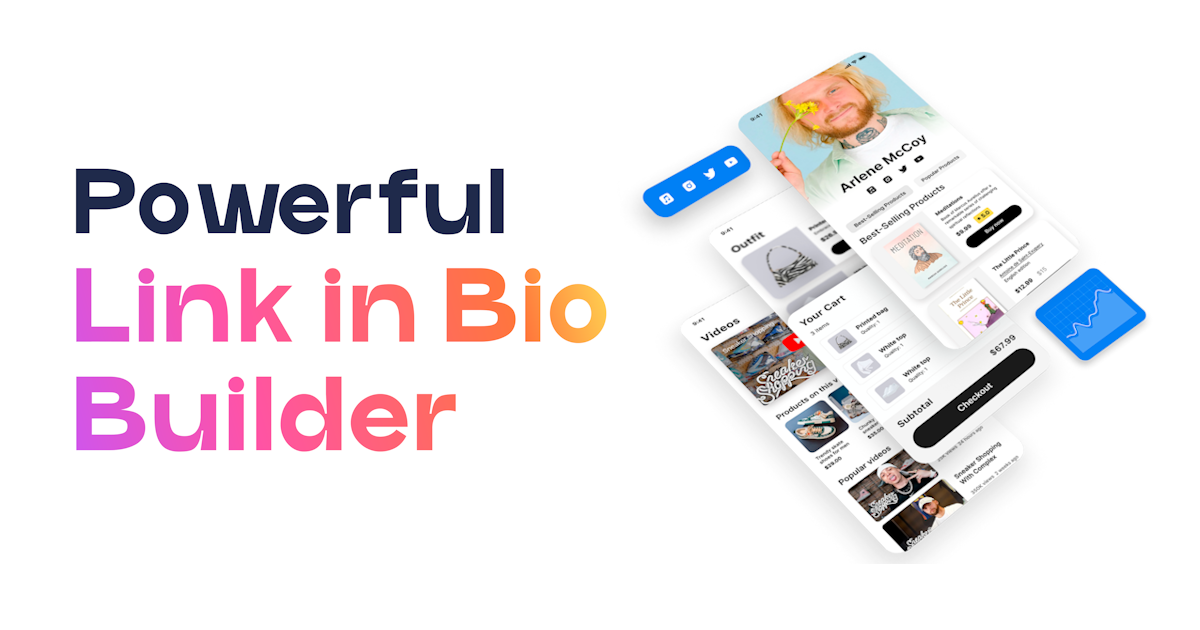
How to Connect Shopify Products to UniLink (Sell Your Store's Products From Your Bio Link)
Import your entire Shopify product catalog into UniLink and turn your link-in-bio page into a shoppable storefront that stays in sync with your Shopify inventory and orders.
What this article covers: How to connect your Shopify store to UniLink, import products, display them on your page, and manage orders and inventory through Shopify while using UniLink as your storefront.
- Connect via Dashboard → Integrations → Shopify → enter store URL → API credentials → import products
- Products, prices, and inventory sync from Shopify — all orders and fulfillment stay in Shopify
- UniLink acts as a shoppable landing page that feeds traffic directly into your existing Shopify checkout
If you run a Shopify store and use social media to drive traffic, your link in bio is one of the highest-traffic touchpoints between your content and your checkout. Connecting Shopify to UniLink closes the gap between "I just saw a product in this creator's post" and "I just bought it" — visitors land on your UniLink page, see a curated product display that matches your brand, and click through directly to the Shopify checkout they already trust. Your inventory, pricing, and order management stay exactly where they are in Shopify. UniLink adds a branded, mobile-optimized storefront layer on top without requiring you to manage products in two places.
What Shopify Integration Does
The Shopify integration pulls your product catalog from Shopify into UniLink using Shopify's API. Once connected, you can browse your Shopify products inside the UniLink Dashboard, select which ones to feature on your page, and configure how they appear — product image, title, price, and description are all imported automatically. When a visitor clicks a product on your UniLink page, they are redirected to that product's page in your Shopify store where they complete the checkout through Shopify's native cart and payment system. UniLink does not process payments or handle orders for Shopify-connected products.
Inventory and pricing sync from Shopify on a regular schedule. If you update a product price in Shopify, the change appears on your UniLink page without you needing to manually update anything. If a product sells out and goes out of stock in Shopify, it can be automatically hidden or marked as unavailable on your UniLink page so visitors are never clicking through to a product page showing "sold out." This sync means your UniLink page always reflects the current state of your Shopify store without any manual maintenance on your end.
The Shopify integration is particularly powerful for content creators who promote specific products in individual TikTok videos, Instagram posts, or YouTube videos. Instead of linking to your entire store homepage, you can curate a UniLink page that features only the specific products from your latest content — the ones viewers are looking for right after watching your video. You can update the product selection in UniLink without touching Shopify at all, and the products always link through to the correct Shopify product pages with accurate prices and stock status.
How to Get Started With Shopify
- Open Integrations in UniLink Dashboard — log in to app.unilink.us, go to Settings in the left sidebar, and click Integrations. Find the Shopify section and click Connect.
- Enter your Shopify store URL — type your store's myshopify.com subdomain (e.g., yourstore.myshopify.com) or your custom Shopify domain. UniLink needs this to know which store to connect to.
- Generate Shopify API credentials — in your Shopify Admin, go to Apps → Develop Apps → Create an App. Name it "UniLink Integration," then under API credentials configure the Admin API access scopes. UniLink requires read access to products, variants, and inventory. Generate the API access token and copy it.
- Enter the API credentials in UniLink — back in UniLink's Shopify integration settings, paste your API access token and confirm. UniLink will test the connection and display a success message if the credentials are valid.
- Import products and add them to your page — once connected, click Browse Products to see your Shopify catalog inside UniLink. Select the products you want to feature, configure their display layout, and save. Add a Product block or Store block to your UniLink page from the page editor and select your imported products.
How to Use Shopify Integration With UniLink
- Curate a product selection for each content campaign — when you post a TikTok or Instagram video featuring specific products, update your UniLink page to show exactly those products at the top of the page. Visitors arriving from that content see immediately what they came looking for without scrolling through your entire catalog.
- Use UniLink's product block display options — configure how products appear on your page. A grid layout shows multiple products at once for variety. A featured product layout highlights a single product with a large image for campaigns where you are promoting one hero item. Match the layout to your content strategy.
- Sync your product catalog after major Shopify updates — if you add new products to Shopify or make significant price changes, trigger a manual sync from UniLink's Integrations settings to ensure the latest data appears immediately rather than waiting for the scheduled sync.
- Monitor click-through performance in UniLink analytics — UniLink's native analytics show how many visitors click each product on your page. Compare this with your Shopify order source data to calculate the conversion rate from UniLink click to Shopify purchase, giving you a full-funnel view of your social commerce performance.
- Create product-focused landing pages for paid ad campaigns — when running paid social ads, point them to a version of your UniLink page curated for that specific ad's products rather than your full social bio page. UniLink's multi-page feature lets you create dedicated pages for different campaigns while using the same Shopify connection.
Key Settings
| Setting | What It Does | Recommended |
|---|---|---|
| Shopify Store URL | Identifies which Shopify store UniLink connects to for product and inventory data | Use the yourstore.myshopify.com URL even if you have a custom domain — the myshopify.com URL is stable and does not change |
| API Access Token | Authenticates UniLink's requests to the Shopify Admin API to read product and inventory data | Create a dedicated Shopify custom app with read-only product scopes rather than using full admin API access — limits UniLink to the minimum permissions needed |
| Product Sync Frequency | How often UniLink refreshes product prices and inventory status from Shopify | Use automatic sync for active stores; trigger manual sync after flash sales or price changes where you need immediate updates |
| Out-of-Stock Behavior | What happens to out-of-stock Shopify products on your UniLink page | Set to hide automatically — showing sold-out products disappoints visitors and wastes clicks on a checkout that will not convert |
| Product Display Layout | Visual format of products on your UniLink page — grid, list, or featured single product | Grid works best for catalog pages; featured single product works best for campaign pages promoting one hero item |
Get the Most Out of Shopify Integration
The biggest mistake creators make with Shopify integration is displaying their entire product catalog on one page. A page with 50 products is overwhelming — visitors leave without clicking anything because they cannot decide where to start. Curate your UniLink page to show five to eight products at most, chosen specifically because they relate to your current content cycle. Less choice leads to more purchases. Rotate the product selection regularly to match whatever you are posting about that week.
Your Shopify product images are the first thing visitors see on your UniLink page. If those images are not mobile-optimized (square or portrait aspect ratio, clear subject on a clean background), they will look poor on a phone screen, which is where the overwhelming majority of your social traffic arrives. Before connecting Shopify, audit your product images in Shopify Admin and update any that use landscape photos, cluttered backgrounds, or very small subjects. The image quality visible on your UniLink page is the same quality you have in Shopify — it transfers directly.
Use the click data from UniLink analytics alongside Shopify's order source reports to calculate per-product conversion rates from your bio link. If Product A gets 200 clicks from UniLink but only 2 orders, while Product B gets 100 clicks and 15 orders, Product B is dramatically outperforming in conversion rate. Feature Product B more prominently, investigate what makes it convert better, and apply those lessons to your other products and how you present them on UniLink.
If you run seasonal promotions or flash sales in Shopify, use UniLink to create urgency on your page. Add a countdown timer block above your product section with the sale end time, and update the product selection to show only the discounted items. The combination of a visible countdown and a curated set of on-sale products on a single mobile page has a significantly higher conversion rate than sending visitors to your Shopify homepage where sale items may be buried below multiple navigation layers.
Troubleshooting
| Problem | Cause | Fix |
|---|---|---|
| UniLink shows "Connection failed" when entering Shopify API credentials | The API access token has insufficient scopes, or the Shopify store URL was entered incorrectly | Verify the store URL uses the myshopify.com domain format; in Shopify Admin, confirm the custom app has read_products and read_inventory scopes enabled; generate a new access token if the original was revoked |
| Products appear on UniLink but prices do not match current Shopify prices | Product sync has not run since the price was updated in Shopify | Go to Dashboard → Integrations → Shopify and click Sync Now to force an immediate product data refresh; for frequent price changes, confirm auto-sync is enabled |
| Sold-out products still show as available on the UniLink page | Out-of-stock behavior is set to "show" rather than "hide," or inventory sync has not run since the product sold out | Change the out-of-stock setting to "hide automatically" in UniLink's Shopify integration settings and trigger a manual sync to immediately remove the sold-out product from the page |
| Visitors click products but land on a "page not found" error in Shopify | The product was deleted or unpublished in Shopify after being imported into UniLink, making the product URL invalid | Run a manual sync — UniLink will update or remove links to deleted products; also check in Shopify Admin that the product is still published to your online store sales channel |
Pros
- Products, prices, and inventory sync from Shopify automatically — no duplicate data management required across two platforms
- Visitors trust Shopify checkout, increasing purchase completion rates compared to unfamiliar checkout systems
- Curated product pages tuned to specific content campaigns dramatically improve click-to-purchase conversion rates
- All order fulfillment, returns, and customer data remain in Shopify where your existing workflows already live
Cons
- Requires generating Shopify API credentials — slightly more technical setup than other integrations
- UniLink does not process payments for Shopify products — visitors are redirected to Shopify checkout, adding one navigation step
- Sync frequency means very rapid inventory changes (flash sale sell-outs) may appear on UniLink briefly after selling out in Shopify
Frequently Asked Questions
Can I sell products directly through UniLink without redirecting to Shopify?
Yes. UniLink has native product and store blocks that process payments through UniLink directly via Stripe integration — no Shopify required. The Shopify integration is specifically for merchants who already have a Shopify store and want to use UniLink as a curated storefront that feeds into their existing Shopify checkout and order management system.
Does connecting Shopify to UniLink require a paid UniLink plan?
The Shopify integration is available on UniLink's Starter plan ($9/mo) and above. The free plan includes UniLink's native product blocks but does not include third-party store integrations. If you are evaluating the integration, the Starter plan is the minimum required tier.
Will UniLink show all my Shopify products or only specific ones?
UniLink imports your full Shopify product catalog and lets you choose which products to display on each page. You have full control over the selection — you can show all products, a curated subset, or different products on different UniLink pages. Products not selected for display are still synced in the background so you can add them quickly without re-importing.
What happens to my UniLink product display if I disconnect the Shopify integration?
If you disconnect Shopify, the products imported from Shopify will stop syncing and their links will no longer update. Products already added to your UniLink page will remain visible but their prices and inventory status will be static from the last sync date. You should remove those product blocks from your page after disconnecting to avoid showing outdated information.
Can I connect multiple Shopify stores to one UniLink account?
UniLink currently supports one Shopify store connection per account. If you operate multiple Shopify stores under separate brands, you would need separate UniLink accounts for each. For a single-store merchant or creator with one branded store, one connection covers all use cases.
Key Takeaways
- Connect via Dashboard → Integrations → Shopify → enter store URL and API credentials — products import automatically and sync on a schedule.
- Curate five to eight products per page rather than showing your full catalog — fewer choices drive more purchases.
- Set out-of-stock products to hide automatically so visitors never click through to unavailable items.
- Match your UniLink product selection to your current content cycle — update it when you post new content featuring specific products.
- Use UniLink's click analytics alongside Shopify order data to identify which products convert best from bio-link traffic.
Ready to turn your bio link into a shoppable storefront?
Connect your Shopify store to UniLink today and give every visitor from your social content a fast path to the products they came to buy.
Get Started FreeCreate Your Free Link-in-Bio Page
Join thousands of creators using UniLink. 40+ blocks, analytics, e-commerce, and AI tools — all free.
Get Started Free