



How to Customize the Checkout Flow on UniLink (Brand Your Purchase Experience)
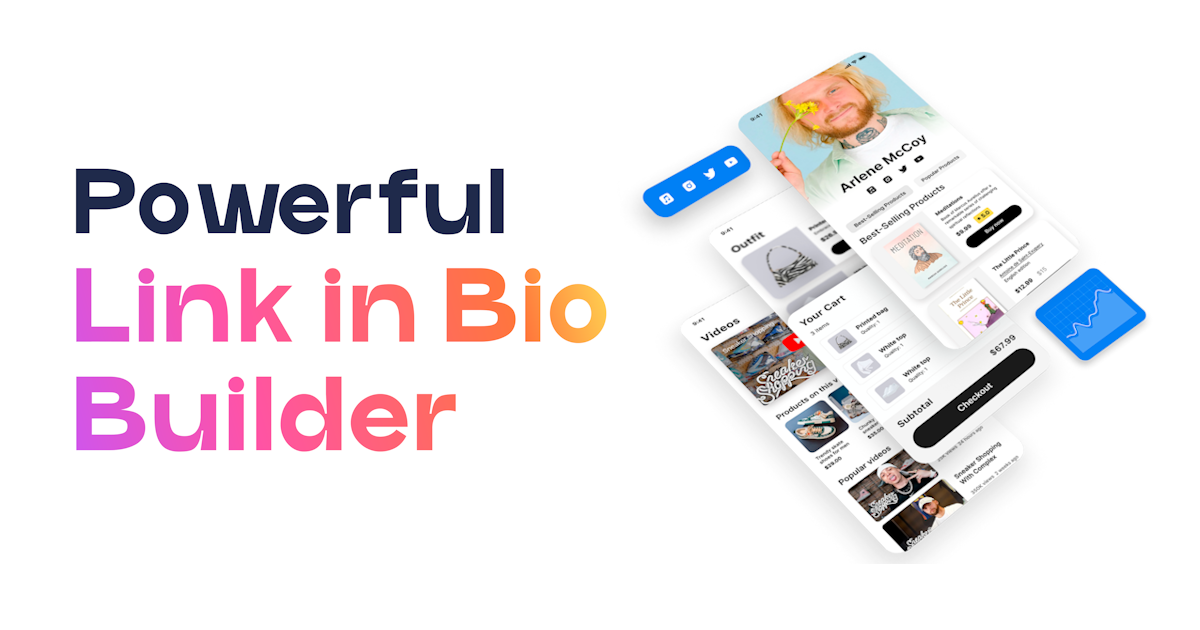
How to Customize the Checkout Flow on UniLink (Brand Your Purchase Experience)
A complete guide to tailoring your UniLink checkout page — from custom fields and confirmation messages to branded receipt emails and post-purchase redirect URLs.
- UniLink's checkout customization is available on the Business plan and lets you brand every step of the purchase experience — form fields, thank-you message, receipt email, and redirect URL.
- Access it via Dashboard → E-commerce → Checkout Settings, where you can add custom fields, upload your logo, and write your own confirmation copy.
- Always test your checkout flow end-to-end after making changes — publish, open an incognito window, and complete a real test purchase to confirm everything looks correct.
When a visitor clicks "Buy" on your UniLink page, everything that happens next — the checkout form, the thank-you screen, the receipt in their inbox — shapes how they feel about the purchase. A generic checkout that looks nothing like your brand breaks the trust you built on your page. UniLink's checkout customization tools let you control that entire experience so buyers feel confident from the moment they enter their card details to the moment your branded email lands in their inbox.
What Checkout Customization Does
UniLink's checkout customization gives you control over the purchase flow that your customers move through after clicking a buy button. By default, every checkout looks the same — UniLink's colors, standard fields, and a generic "thank you for your purchase" message. With checkout customization, you replace all of that with your own branding, your own copy, and the specific fields you actually need to fulfill orders.
The feature covers four distinct areas. First, the checkout form itself: you can add custom fields beyond the defaults (name, email, address) to collect anything your product requires — t-shirt sizes, personalization text, event preferences, or a message for a gift order. Second, the checkout page design: upload your logo, adjust the accent color to match your brand, and write a short intro message that appears above the payment form so buyers know they're still dealing with you. Third, the post-purchase confirmation screen: instead of a blank "order received" page, you can write a personalized message and optionally redirect buyers to a URL — your Discord, a private video, a download page, or anywhere else. Fourth, the receipt email: write your own subject line, header, and body text so buyers receive something that looks like it came from you, not from a generic platform.
Checkout customization is available on the Business plan ($49/month). It applies per page — each page can have its own distinct checkout configuration, which means an agency managing multiple client pages can give each client their own branded checkout without any overlap.
How to Get Started
- Confirm your plan: Go to app.unilink.us → Account → Billing and verify you're on the Business plan. Checkout customization is not available on Starter or Pro. Upgrade from the Billing page if needed.
- Open the page you want to configure: Navigate to My Pages, find the page with e-commerce blocks, and click Edit to open the page editor.
- Access Checkout Settings: In the left sidebar of the editor, click E-commerce, then select Checkout. This opens the checkout configuration panel for this specific page.
- Connect a payment method if you haven't already: Checkout customization requires an active payment processor. If you see a warning banner, go to Settings → Payments, connect Stripe or PayPal, then return to the Checkout panel.
- Save your initial settings: Click Save before navigating away. Checkout settings are saved per-page and are separate from the block-level save — don't skip this step or your changes will be lost.
How to Use Checkout Customization
- Brand the checkout page: In the Checkout panel, upload your logo (PNG or SVG, minimum 200px wide). Set the accent color to your brand hex code — this colors the "Pay" button and any highlighted elements buyers see during checkout.
- Add custom fields: Click Add Field to insert extra input fields into your checkout form. Choose the field type (text, dropdown, checkbox, or textarea), write a label, set whether it's required or optional, and drag to reorder fields. Keep custom fields to 3 or fewer — each additional field measurably reduces checkout completion rates.
- Write your confirmation message: Scroll to the Post-Purchase section. Enter a short thank-you message (2–4 sentences) that appears on the confirmation screen immediately after payment. Mention the next step — "Check your email for your download link" or "We'll ship within 2 business days."
- Set a redirect URL (optional): Below the confirmation message, enter a URL to automatically redirect buyers after 5 seconds. Use this to send buyers to a private community, a video walkthrough, a Notion doc, or any URL that continues the customer journey.
- Customize the receipt email: Toggle on Custom Receipt Email, then write your subject line, email heading, and body text. Keep the body under 150 words — it's a receipt, not a newsletter. Click Send Test Email to preview exactly what buyers receive before you publish.
Key Settings
| Setting | What It Does | Recommended |
|---|---|---|
| Checkout logo | Displays your brand logo at the top of the checkout form so buyers stay oriented | Upload a transparent PNG at 400px wide minimum; avoid logos with white backgrounds |
| Accent color | Colors the primary action button and interactive elements across checkout | Use your exact brand hex; ensure 4.5:1 contrast ratio against white for accessibility |
| Custom fields | Adds extra inputs (text, dropdown, checkbox) to the checkout form for order details | Add only fields you actually need for fulfillment; 1–2 optional, 1 required maximum |
| Post-purchase redirect URL | Automatically sends buyers to a URL 5 seconds after the confirmation screen appears | Use for digital access (private Discord, download page); leave blank for physical goods |
| Custom receipt email | Replaces the default UniLink receipt with your own subject, heading, and body text | Always enable; use the buyer's first name via the {first_name} merge tag in your subject line |
Get the Most Out Of Checkout Customization
Keep your checkout form as short as possible. Every field you add is friction between a buyer's intent and a completed order. The default UniLink checkout already collects name, email, and billing address — those cover the vast majority of fulfillment needs. Before adding a custom field, ask yourself: "Can I collect this information after the purchase via email?" If yes, collect it post-purchase. Reserve required custom fields only for information without which you genuinely cannot fulfill the order, like a personalization message for a custom product.
Write your confirmation message in first person, as if you're speaking directly to the buyer. Something like "Thank you for your order — I'll have your presets over to your inbox within the hour. If you have questions, reply to the receipt email and I'll get back to you fast" feels personal and sets clear expectations. Avoid vague copy like "Your order has been received." Specificity reduces support emails because buyers know exactly what happens next.
Use the redirect URL strategically. If you're selling a digital product, redirect buyers to a welcome page that explains how to access what they just bought. If you're selling a course, redirect to a private onboarding video. If you're selling physical goods, redirect to a page showing your fulfillment timeline and tracking information. A well-chosen redirect turns a transaction into the start of a relationship — and gives buyers something useful to do in the 48 hours before their order arrives.
Review your custom receipt emails quarterly. Prices change, Discord links expire, product names shift. A receipt email that references an old product version or a broken link damages trust after the sale. Set a recurring calendar reminder to open your receipt email settings, check all links, and verify the copy still reflects your current offering and tone of voice.
Troubleshooting
| Problem | Cause | Fix |
|---|---|---|
| Checkout customization panel is grayed out | Current plan is Starter or Pro; feature requires Business plan | Go to Account → Billing and upgrade to Business; customization unlocks immediately after upgrade |
| Logo doesn't appear on live checkout | Image file too small, wrong format, or browser cache showing old version | Upload a PNG or SVG at minimum 200px wide; clear cache and test in incognito after saving |
| Redirect URL not firing after purchase | URL entered without https://, or buyer closed the tab before the 5-second timer completed | Ensure URL starts with https://; note that redirect cannot be forced if buyer closes tab — consider using the confirmation message to provide the link instead |
| Custom receipt email going to spam | Subject line contains spam-trigger words or your domain lacks SPF/DKIM records | Avoid words like "free," "winner," or "act now" in subject lines; contact support to verify your sending domain's email authentication |
- Branded checkout removes the disconnect between your page and the payment experience, increasing buyer confidence
- Custom fields let you collect fulfillment-critical data (personalization, preferences) without a separate form
- Post-purchase redirect turns the confirmation screen into the first step of customer onboarding
- Custom receipt emails create a professional impression that generic platform receipts cannot match
- Requires the Business plan ($49/month) — not available on Starter or Pro
- Each custom field added to the checkout form reduces completion rate; discipline is required
- Redirect URL cannot guarantee delivery if the buyer closes the tab before the timer completes
Frequently Asked Questions
Can I have different checkout designs for different pages?
Yes. Checkout settings are configured per page, not per account. Each page on your UniLink account can have its own logo, accent color, confirmation message, redirect URL, and receipt email. This is particularly useful for agencies managing multiple client pages — each client gets their own checkout experience without any configuration overlap.
Can I make custom checkout fields required?
Yes. When adding a custom field, toggle the "Required" option. Required fields block checkout submission if left blank — the buyer sees an inline error message. Use required status only for fields without which you genuinely cannot fulfill the order; making optional information required noticeably reduces conversion rates.
Does the custom receipt email replace the default order confirmation?
Yes, completely. When you enable custom receipt email, UniLink sends your email instead of the default. Your email still includes the order summary (items, price, order number) automatically appended at the bottom — you only write the header, body, and subject. You cannot remove the order summary from the receipt.
Can I add a discount code field during checkout?
Discount code support is a separate feature from checkout customization. If you have discount codes configured under E-commerce → Discounts, a discount field automatically appears in your checkout form — you don't need to add it as a custom field. Custom fields are for information you collect, not for platform-level commerce features.
How do I test my checkout without making a real purchase?
If you've connected Stripe, you can use Stripe's test card number (4242 4242 4242 4242, any future expiry, any CVC) to complete a test checkout without charging a real card. After the test, delete the test order from your Orders tab. PayPal also offers sandbox testing via their developer dashboard. Always test in an incognito window so your own login doesn't affect what the buyer sees.
- Checkout customization is a Business plan feature — upgrade at Account → Billing before expecting to see the options.
- Access per-page checkout settings at Dashboard → E-commerce → Checkout; settings apply only to the page you're editing.
- Keep custom fields to a minimum — every extra required field measurably reduces checkout completion rates.
- Use the post-purchase redirect URL to onboard digital buyers immediately; leave it blank for physical goods.
- Always send a test receipt email and open it on mobile before publishing your checkout changes live.
Ready to brand your checkout experience? Upgrade to Business on UniLink and give every buyer a purchase experience that looks and feels like you.
Create Your Free Link-in-Bio Page
Join thousands of creators using UniLink. 40+ blocks, analytics, e-commerce, and AI tools — all free.
Get Started Free