



How to Migrate From Linktree to UniLink (Move Your Links, Bio, and Audience)
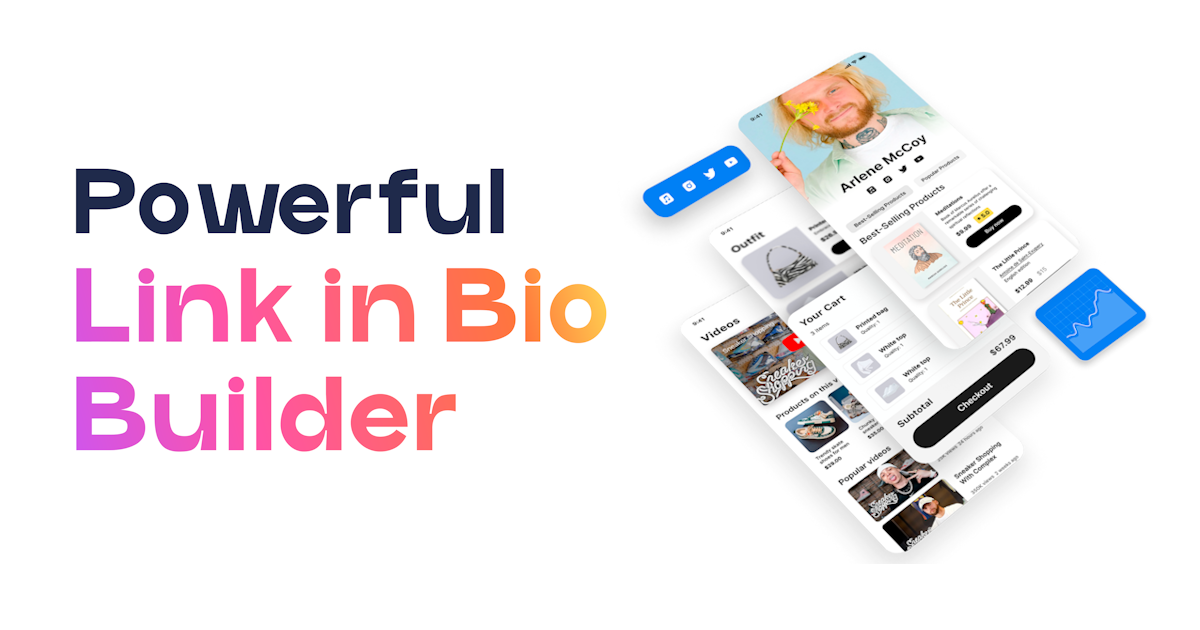
How to Migrate From Linktree to UniLink (Move Your Links and Audience in One Day)
A complete step-by-step migration guide — export your Linktree data, recreate your page on UniLink, update every bio link, and unlock features Linktree doesn't offer.
Linktree pioneered the link-in-bio format, but it has not kept pace with what creators and businesses now need from a profile page. If you are looking for a built-in store, email list capture, advanced analytics, social media publishing, or simply a page that looks like a real website rather than a generic list of links, UniLink offers all of that — and migrating from Linktree is straightforward enough to do in a single day without losing a single follower.
This guide takes you through every step of the migration: from capturing your Linktree data before you deactivate anything, through rebuilding your page on UniLink with all its additional capabilities, to updating your audience touchpoints so no one ends up at a dead link. By the end, your UniLink page will be live, your Linktree will either redirect to it or serve as a backup, and your audience will not have noticed anything changed except that your page looks significantly better.
What This Guide Covers
This migration guide covers the full transition from Linktree to UniLink: exporting your existing Linktree data, recreating your links in UniLink's block system, replicating your visual identity (profile photo, brand colors, fonts, background), updating every social media bio and platform profile where your Linktree URL appears, communicating the change to your audience, and setting up a Linktree redirect if you want to keep your old URL working during the transition period.
It also covers what you gain by making the switch: the UniLink features that have no equivalent in Linktree, including the online store, email list collection, CRM, analytics dashboard, and social media publishing — so you can decide which new features to set up immediately versus later.
Whether you have been on Linktree for two weeks or three years, the migration process is the same and takes the same amount of time. The only variable is how many platforms you need to update your bio link on.
How to Get Started
- List everything on your current Linktree — before touching anything, open your Linktree, take a screenshot of the full page, and write down or copy every link title and URL. This is your migration checklist. Do not skip this step — you will reference it repeatedly during the next stages.
- Export Linktree analytics if you need them — if you care about historical click data, export it now from Linktree's analytics section before you start making changes. Linktree analytics are not transferable to UniLink, but having them as a CSV gives you a baseline to compare against once UniLink analytics begin accumulating.
- Create your UniLink account — go to unil.ink/signup and sign up. Choose a username that matches your Linktree username if it is available (this makes the URL swap seamless and keeps brand recognition). If your Linktree username is taken on UniLink, choose the closest available alternative.
- Note your Linktree design settings — write down or screenshot: your background color or image, your profile photo, your button colors and border style, and any font settings. You will use these to match your visual identity on UniLink.
- Keep your Linktree account active during migration — do not deactivate or delete your Linktree until your UniLink page is fully live, all bios are updated, and you have confirmed the UniLink URL is working correctly. Your Linktree is your safety net during the transition.
Step-by-Step Guide
- Recreate your links in UniLink — in the UniLink Dashboard, add a Links block to your page. For each link on your Linktree checklist, add a new link button: enter the title exactly as it appears on Linktree and paste the destination URL. Verify each URL by hovering over or clicking the link preview in the Dashboard. This step ensures no link has a typo introduced during the migration.
- Recreate your visual design — go to the Dashboard's Design tab and set your background color, button style, and font to match your Linktree settings. Upload your profile photo (the same image you use on Linktree) and add your display name and bio text. Aim for a close visual match so returning visitors recognize the page immediately. UniLink's design system offers additional customization — additional fonts, gradient backgrounds, custom button shapes — so treat this as an opportunity to refresh the look if you want.
- Add your social media icons — in UniLink, add a Social Links block. Add your Instagram, TikTok, YouTube, Twitter/X, and any other platform profile links. On Linktree these are shown as small icons at the top or bottom of the page — UniLink handles them the same way in the Social Links block.
- Publish your UniLink page — click Save & Publish in the Dashboard. Open your unil.ink/username URL in an incognito window and confirm every link works, the photo loads, and the page matches your Linktree design closely enough that visitors will feel it is yours.
- Update your social media bios — this is the most time-intensive step. Go through every social platform where your Linktree URL appears in the bio — Instagram, TikTok, YouTube About, Twitter/X bio, Pinterest, Facebook Page, LinkedIn — and replace the Linktree URL with your UniLink URL (unil.ink/username or your custom domain). Start with your highest-traffic platform first so the most visitors are redirected immediately.
- Set your Linktree to redirect (optional) — if you want to continue sending old traffic from anyone who bookmarked your Linktree URL, Linktree Pro allows you to add a redirect link at the top of your page. Add your UniLink URL as the first link with a title like "My links have moved — click here" and pin it to the top. This is a soft redirect — visitors click once and arrive at UniLink. For a hard redirect you would need Linktree's "Custom Domain" feature and your own domain DNS settings.
- Announce the change to your audience — post a story or short video on your main social platform saying you have a new, improved link page and showing off what changed. Frame it as an upgrade, not just a migration. Highlighting a new feature — your new online shop, email newsletter signup, or improved design — gives followers a reason to visit the new page and re-engage with your content.
Key Settings Explained
| Setting | What it controls | Best practice |
|---|---|---|
| Username (unil.ink/username) | Your permanent UniLink URL shared everywhere | Choose the same as your Linktree username if available; avoid changing it after publishing to prevent broken links |
| Links block order | The sequence your link buttons appear to visitors | Place your most-clicked links first; match your Linktree order initially, then optimize based on UniLink analytics |
| Design → Theme | Global visual style for your page | Start by matching your Linktree colors for continuity; upgrade the design once the migration is complete and traffic is stable |
| Social Links block | Platform icon links shown at top/bottom of your page | Add all platforms you are active on; UniLink shows follower counts for some platforms if connected via OAuth |
| Custom domain | Your own branded URL (e.g., links.yourbrand.com) instead of unil.ink/username | Set up after migration is complete and traffic is stable on unil.ink/username; do not migrate and add custom domain at the same time |
How to Get the Most Out of It
Once your links are live on UniLink and traffic is flowing, invest 30 minutes into setting up the features that Linktree does not offer. The online store block lets you sell digital products, courses, or physical items directly from your profile — no Gumroad or Shopify link required. If you sell anything, add at least one product to your UniLink page in the first week; even a single $5 digital download converts remarkably well from a link-in-bio page because the buying intent of someone clicking a bio link is already high.
Add an email list capture block and start collecting email addresses from day one. Your social media followers are rented — the platform can change algorithms, restrict reach, or ban accounts. An email list is owned by you. UniLink's email capture block integrates directly with Mailchimp, ConvertKit, and other email providers, so every visitor who opts in lands directly in your email list without any manual export/import.
After two weeks on UniLink, open the analytics dashboard and compare your click distribution to what you remember from Linktree. You will almost always find that one or two links drive 80% of clicks and several others get almost none. Use that data to reorder your links (highest-traffic at the top) and remove or consolidate the dead-weight links that are adding visual clutter without adding value.
If you have a significant audience on multiple platforms, consider using UniLink's scheduling and social media publishing features to post the same content across platforms from a single interface. Having your link-in-bio and your content publishing in the same tool reduces the number of dashboards you need to manage daily.
Troubleshooting Common Issues
| Problem | Likely cause | Fix |
|---|---|---|
| Your preferred username is taken on UniLink | Another user registered it first | Try username with an underscore, dot, or short suffix (e.g., yourname_ or yourname.official); contact support if you believe it is your own brand |
| Instagram bio link still shows Linktree after update | Instagram app caches profile data; followers see cached version | Force-close and reopen the Instagram app; the update typically shows for new visitors within minutes |
| Links on UniLink go to wrong destinations | Copy-paste error introduced during migration | Click each link in the Dashboard preview to verify the destination; compare against your migration checklist |
| Traffic dropped after switching bio links | Normal adjustment period while followers adapt to seeing the new URL | Post content pointing followers to the new page; check analytics after 1 week — traffic typically recovers and often increases due to better page engagement |
Pros
- Migration can be completed in a single day — no downtime for your audience
- UniLink adds features not available on Linktree: online store, email capture, CRM, social publishing, analytics
- Your Linktree URL can remain active as a soft redirect during the transition — zero risk of broken links
- UniLink analytics immediately begin tracking clicks, so you start building performance data from day one
Cons
- Updating bio links across many platforms is time-consuming — budget 1 hour for 5–10 platforms
- Historical Linktree analytics do not transfer — you lose the click history from before the migration date
- If your Linktree username is taken on UniLink, your URL will change, requiring all bio links to use the new URL
Frequently Asked Questions
Will my followers lose access to my links during the migration?
No. Keep your Linktree active and your Linktree bio links in place until your UniLink page is published and all bio links are updated to the new URL. The swap is instantaneous — the moment you update your Instagram bio (for example), new visitors go to UniLink while anyone with old bookmarks still reaches Linktree. If you also add a redirect link on Linktree pointing to UniLink, even old bookmarks will redirect cleanly.
Can I keep my Linktree subscription running alongside UniLink?
Yes. You can run both indefinitely if you want — there is no technical conflict. Many creators run UniLink as their primary page and keep a minimal Linktree as a redirect landing page for old links. Whether to cancel Linktree is entirely up to you and depends on whether you want to save the subscription cost.
Does UniLink offer a custom domain like Linktree Pro?
Yes. UniLink supports custom domains on paid plans. You can connect links.yourbrand.com or any other subdomain to your UniLink page by adding a CNAME record in your domain's DNS settings. The setup is the same as Linktree's custom domain feature and takes effect within 24–48 hours of adding the DNS record.
How do I migrate my Linktree email list to UniLink?
Linktree's email capture feature stores subscribers in your connected email provider (Mailchimp, etc.), not in Linktree itself. Your email list lives in your email provider, so there is nothing to migrate — simply connect your email provider to UniLink's email capture block and it will add new subscribers to the same list. Your existing subscribers are unaffected.
What UniLink features should I set up first after migrating?
Prioritize in this order: (1) All your existing links recreated exactly — this is non-negotiable. (2) Email capture block — start building your owned audience from day one. (3) Analytics review after the first week — see which links perform best and reorder accordingly. (4) Online store if you sell anything — even a single product. (5) Social publishing and advanced features once the core page is stable and performing well.
Key Takeaways
- Screenshot and list all your Linktree links before starting — this is your migration checklist and prevents any link from being missed.
- Keep your Linktree active until your UniLink page is live and all bio links are updated — zero downtime for your audience.
- Updating bio links across social platforms is the most time-intensive step — start with your highest-traffic platform first.
- UniLink adds a store, email capture, CRM, and analytics that Linktree does not offer — set up email capture immediately on day one.
- Post an announcement to your audience framing the change as an upgrade — turn the migration into a content moment that drives engagement with your new page.
Ready to upgrade from Linktree to UniLink?
Create your UniLink page in minutes, migrate your links today, and unlock the store, email capture, and analytics features your Linktree page never had.
Get Started FreeCreate Your Free Link-in-Bio Page
Join thousands of creators using UniLink. 40+ blocks, analytics, e-commerce, and AI tools — all free.
Get Started Free