



How to Use the Shop Block in UniLink (Sell Products From Your Link-in-Bio)
How to Use the Shop Block in UniLink (Sell Products From Your Link-in-Bio)
A step-by-step guide to adding the Shop block to your UniLink page so you can sell physical or digital products directly from your link-in-bio.
- The Shop block lets you list and sell products (physical or digital) directly on your UniLink page — no separate storefront needed.
- Add it from the Dashboard: click Add Block, choose Shop, then upload products with images, prices, and variants.
- Connect Stripe or PayPal under Settings → Payments before your first sale — the block won't process checkout without it.
- Common gotcha: publishing the block before connecting a payment method leaves the buy button live but broken for visitors.
If you've ever sent someone to a separate Shopify store or Gumroad page just so they could buy something, you know how much friction that creates. Every extra click is a lost sale. The Shop block in UniLink removes that step by letting visitors browse products, pick a variant, and complete checkout without ever leaving your page. Whether you're a creator dropping limited merch, a photographer selling digital presets, or a small business moving physical goods, the Shop block is the fastest way to go from "link in bio" to "checkout complete."
What the Shop block does
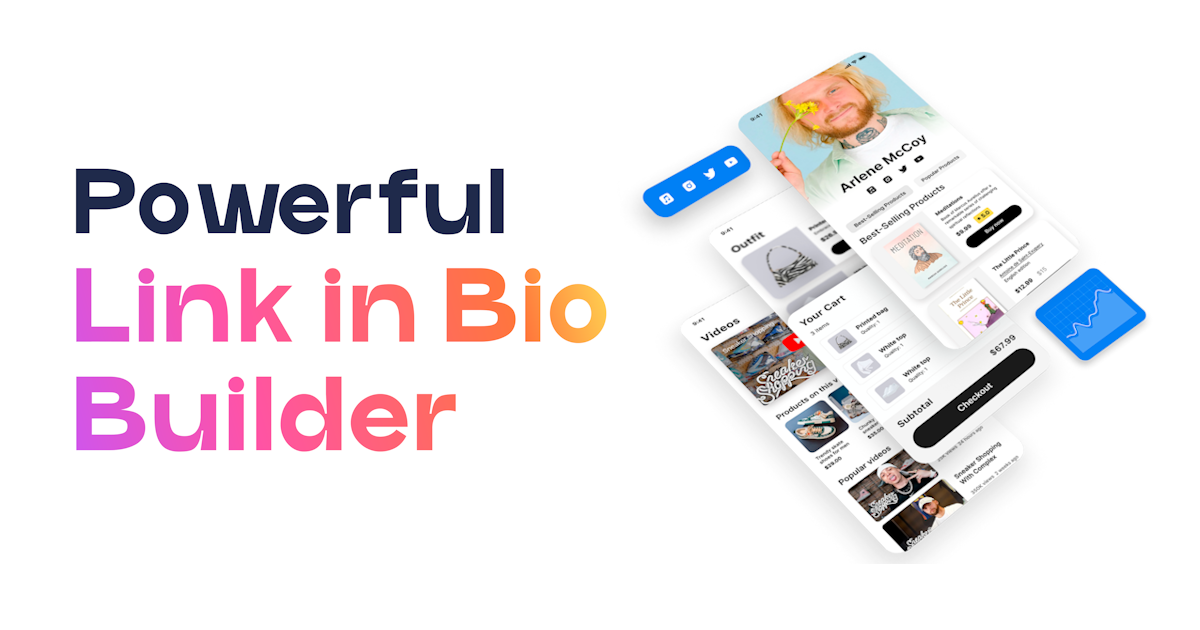
The Shop block turns your UniLink page into a lightweight storefront. Instead of redirecting visitors to an external site, it renders a product grid or list directly on your page. Each product card shows a photo, name, price, and an add-to-cart button. Tap any card and a product detail view opens inline — visitors see a description, any available variants (size, color, format), and a quantity selector before they proceed to checkout.
On the back end, the block is connected to UniLink's built-in storefront. This means inventory is tracked automatically: when a size sells out, that variant is marked unavailable without you touching anything. Orders land in your UniLink dashboard under the Orders tab, where you can manage fulfillment, issue refunds, and export CSVs for your records. Payment processing goes through Stripe or PayPal — whichever you connect in your account settings.
Digital products work the same way, with one difference: after a successful payment, UniLink automatically delivers a download link to the buyer's email. You don't need to set up a separate delivery flow or use a third-party tool. This makes the Shop block practical for selling things like PDF guides, Lightroom presets, design templates, and audio files alongside physical goods — all from the same block, on the same page.
How to add the Shop block
- Open your page in the Dashboard: Log in to UniLink, go to My Pages, and click Edit on the page where you want the block.
- Add a new block: Click the + Add Block button in the editor. In the block picker, scroll to the Commerce section and select Shop.
- Add your first product: Inside the block editor, click Add Product. Fill in the product name, description, price, and upload at least one photo. If the product has variants (e.g., S/M/L or Black/White), open the Variants tab and add each option.
- Set inventory (optional): If you have a limited quantity, enter it in the Stock field. Leave it blank for unlimited stock — useful for digital products.
- Connect your payment method: If you haven't already, go to Settings → Payments and connect Stripe or PayPal. Come back to your page when done — the block saves your product data automatically.
- Choose a display layout: In the block settings panel, select either Grid (2-column product cards) or List (single column with larger images). Grid works better for visual products; List works better when the product name and price are the main selling point.
- Save and publish: Click Save, then Publish. Your Shop block is now live.
Key settings to configure
| Setting | What it does | Recommended value |
|---|---|---|
| Display layout | Controls how products are arranged — Grid (2-column cards) or List (single column) | Grid for visual/merch products; List for info products or when descriptions matter |
| Block title | The heading shown above your product grid, visible to visitors | Something specific like "My Merch" or "Digital Downloads" — avoid the generic "Shop" |
| Product images | Up to 5 photos per product; the first image is the card thumbnail | Minimum 800×800px, square crop; use natural light or clean white background |
| Variants | Define option groups (Size, Color, Format, etc.) with individual prices and stock per variant | Only add variants that actually differ in price or stock — unnecessary variants create friction |
| Stock tracking | Limits how many units can be purchased; automatically marks variants sold-out | Enable for physical goods; leave blank (unlimited) for digital products |
| Show price | Toggles whether price is displayed on the product card or only inside the detail view | On — visitors filter by price before clicking; hiding it causes more abandonment |
| Payment processor | Routes checkout through Stripe or PayPal; set at account level, applies to all Shop blocks | Stripe for card payments + Apple/Google Pay; PayPal if your audience prefers it |
Best practices for the Shop block
Keep your product catalog focused. The Shop block is not a full storefront — it's a conversion point for visitors who already have some interest in you. A page with 3 to 6 products almost always converts better than one with 20, because visitors aren't overwhelmed. Lead with your best seller or most recognizable product as the first card in the grid. You can reorder products by dragging them in the block editor.
Write product descriptions that answer the one question buyers always have: "Is this right for me?" For physical goods, include dimensions, materials, and shipping estimate. For digital products, be specific about what's included — "14 Lightroom presets, desktop and mobile compatible, compatible with Lightroom 6+" tells buyers everything they need to decide, while "a pack of presets" tells them nothing. Descriptions don't need to be long; they need to be complete.
Price your products cleanly. Round numbers ($25, $49, $99) process faster mentally and feel less arbitrary than $24.99 on a personal creator page. The cent-drop pricing that works in big retail feels out of place when someone is buying directly from a person they follow. That said, if you're running a limited sale, using a strikethrough on the original price next to a discounted price is effective — you can do this by adjusting the product price during a sale period.
Revisit your inventory numbers after any major promotion. If you run a sale and don't update stock, the block will continue showing products as available even when you've run out. Set a calendar reminder the day a promo ends to either restock numbers or mark products as unavailable so visitors don't complete checkout on something you can't fulfill.
Common mistakes and how to fix them
| Mistake | Why it happens | Fix |
|---|---|---|
| Buy button appears but checkout fails | Payment processor not connected before publishing the block | Go to Settings → Payments, connect Stripe or PayPal, then test checkout with a real card |
| Product images look blurry or stretched | Images uploaded below 800×800px or with non-square aspect ratio | Re-upload using square images at 800×800px or higher; UniLink will crop non-square images automatically but results vary |
| Sold-out products still show as available | Stock tracking left blank (unlimited) for physical goods, or not updated after a sale | Edit the product, set the correct stock number, or toggle the product to "Unavailable" if it's fully sold out |
| Buyers not receiving digital product downloads | Product not marked as "Digital" type, so no auto-delivery is triggered | Edit the product and set the type to Digital; upload the file in the Digital File field; re-save |
| Block visible on page but showing no products | Products added but saved in draft state rather than published | In the block editor, check each product has a green "Active" badge; toggle any drafts to Active |
| Variant selector missing at checkout | Variants defined in the block but not assigned stock or price | Open the product, go to Variants, and make sure each variant has a price — even if it's the same as the base price |
When to use the Shop block
- You sell a small, focused catalog (1–10 products) and don't need complex inventory management
- You want checkout to happen on your UniLink page without sending visitors elsewhere
- You sell digital products and want automatic file delivery after payment
- You're a creator testing whether your audience will buy before investing in a full storefront
- You want orders, payments, and analytics all in one place without third-party integrations
When to use something else
- You have a large catalog (50+ products) — use the Link block to send visitors to your Shopify or WooCommerce store instead
- You need advanced shipping rules, tax calculation by jurisdiction, or wholesale pricing — those require a dedicated e-commerce platform
- Your products require subscriptions or recurring billing — use the Link block to a Stripe payment link or a subscription-focused tool
- You're a service business selling time-based appointments — the Booking block fits that use case better
Frequently asked questions
Can I sell both physical and digital products in the same Shop block?
Yes. Each product in the block has its own type setting — you can mix physical and digital products freely within a single Shop block. Physical products show shipping options at checkout; digital products skip shipping and trigger automatic file delivery to the buyer's email instead.
What payment methods do customers see at checkout?
If you connect Stripe, customers can pay with any major credit or debit card, plus Apple Pay and Google Pay on supported devices. If you connect PayPal, customers see PayPal's standard checkout options including pay-later. You can connect both processors and UniLink will use whichever you set as primary.
Does UniLink take a fee on sales made through the Shop block?
UniLink does not take a percentage cut on sales. You pay the standard payment processor fee (Stripe charges 2.9% + $0.30 per transaction; PayPal rates vary by plan). Check your current UniLink plan for any platform-level transaction fees — higher-tier plans reduce or eliminate these.
How do I issue a refund for a Shop block order?
Go to your UniLink Dashboard, open the Orders tab, find the order, and click Refund. UniLink sends the refund request to your payment processor, which returns the funds to the customer. Refunds typically appear on the buyer's card within 5–10 business days depending on their bank.
- The Shop block lets visitors browse and buy products without leaving your UniLink page — reducing friction and increasing conversions.
- Connect Stripe or PayPal under Settings → Payments before publishing the block, or checkout will fail for your visitors.
- Keep your catalog small and focused — 3 to 6 products on a creator page outperforms a large catalog for conversion.
- Mark products as "Digital" to enable automatic file delivery; physical products use the fulfillment flow in the Orders tab.
- Use square product images at 800×800px or larger — the thumbnail is the single biggest factor in whether someone taps to learn more.
Ready to start selling? Create your free UniLink page and add your first Shop block today.
Create Your Free Link-in-Bio Page
Join thousands of creators using UniLink. 40+ blocks, analytics, e-commerce, and AI tools — all free.
Get Started Free