



How to Use the Video Block in UniLink (Embed YouTube, TikTok, or Custom Videos)
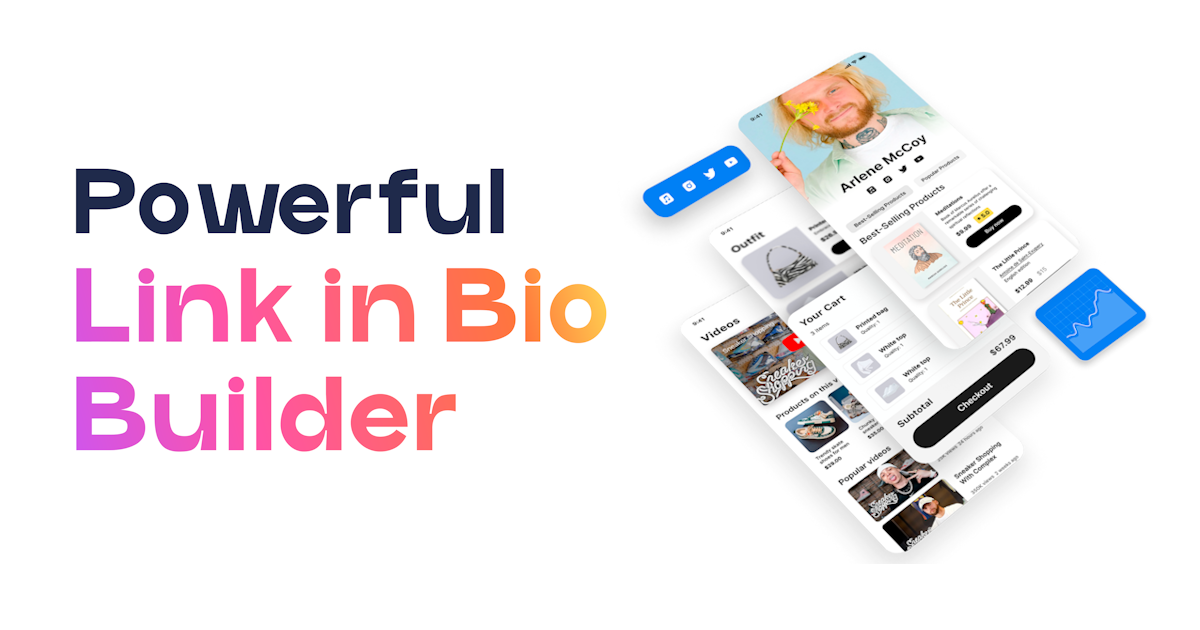
How to Use the Video Block in UniLink (Embed YouTube, TikTok, or Custom Videos)
A step-by-step guide to adding, configuring, and getting the most out of the Video block on your UniLink page.
- The Video block embeds YouTube, TikTok, Vimeo, or direct MP4 uploads directly on your UniLink page.
- Add it from the Dashboard block picker — paste a URL or upload a file and you're done in under a minute.
- Enable "Mute on load" if you use autoplay; browsers block unmuted autoplay by default.
- Common gotcha: TikTok embeds may refuse to play on some browsers due to TikTok's own embed restrictions — use a direct MP4 export as a fallback.
You've done the work — filmed the video, edited it, posted it. Now visitors land on your link-in-bio page and there's no video in sight, just a row of text links. That gap costs you engagement, watch time, and conversions. The UniLink Video block solves this directly: it lets you put an actual playable video — not a thumbnail link to another tab — front and center on your page. Whether you're a musician dropping a new music video, a coach sharing a client testimonial, or a creator who wants their best YouTube content visible the moment someone hits your link, the Video block gets it there without requiring any embed code or technical setup.
What the Video block does
The Video block renders an embedded media player inside your UniLink page. Visitors can watch the video without leaving your page and without clicking through to another platform. This keeps them on your page longer, reduces the friction between "interest" and "action," and gives your page a polished, media-rich feel that plain link lists cannot match.
UniLink supports four video sources: YouTube (single video or channel playlist), TikTok (individual post URL), Vimeo, and direct MP4 upload. For YouTube and Vimeo you paste the URL and the block handles everything else — title fetching, thumbnail generation, aspect ratio, the player controls. For TikTok you paste the post URL and UniLink extracts the embed. For MP4 you upload the file directly, which is the most reliable option when you need guaranteed playback across all devices.
Beyond the source, the block gives you a set of playback controls: autoplay (plays as soon as the block scrolls into view), mute on load (required for autoplay to work in most browsers), loop (replays automatically when the video ends), and a custom thumbnail override (swap out the platform-generated preview image for one of your own). You can also lock the aspect ratio — 16:9 is the standard for YouTube and most video content, but 9:16 works better for TikTok-style vertical video, and 1:1 is useful for Instagram repurposes.
How to add the Video block
- Open your page in the Dashboard: Log in to UniLink and navigate to the page you want to edit. Click the blue "Add block" button.
- Select "Video" from the block picker: Scroll or search for the Video block in the list and click it to insert it at the bottom of your page. You can drag it to a different position afterward.
- Choose your video source: In the block settings panel on the right, select the source type — YouTube, TikTok, Vimeo, or Upload. Each source shows a different input field.
- Paste the URL or upload the file: For URL-based sources, paste the full link (e.g.,
https://www.youtube.com/watch?v=abc123). For MP4, click "Upload" and select a file from your device. UniLink will process and host it. - Set the aspect ratio: Choose 16:9 for landscape content, 9:16 for vertical/TikTok-style, or 1:1 for square. This controls the player container — the video itself is scaled to fit.
- Configure playback options: Toggle autoplay, mute on load, and loop as needed. If you enable autoplay, also enable mute — otherwise the browser will block autoplay silently.
- Save and preview: Click "Save" in the Dashboard toolbar. Use the Preview button to see how the block looks on mobile and desktop before publishing.
Key settings to configure
| Setting | What it does | Recommended value |
|---|---|---|
| Video source | Determines where the video is loaded from — YouTube, TikTok, Vimeo, or direct MP4 upload | YouTube or MP4 for the most reliable cross-device playback |
| Aspect ratio | Sets the proportional dimensions of the player container (16:9, 9:16, or 1:1) | 16:9 for standard content; 9:16 for vertical/Reels-style video |
| Autoplay | Starts playing the video as soon as it scrolls into the viewer's viewport | On — but only if Mute on load is also enabled |
| Mute on load | Starts the video muted; viewer can unmute manually | On whenever autoplay is enabled; required by browser policy |
| Loop | Replays the video automatically when it ends | On for short demo clips or visual backgrounds; Off for longer content |
| Custom thumbnail | Replaces the platform-generated preview image with your own image | Use when the default thumbnail is low-quality or off-brand |
| Playlist mode (YouTube) | Loads a YouTube channel or playlist URL and shows multiple videos with navigation | Use when you want to showcase a content library, not just one video |
Best practices for the Video block
Position matters more than most people expect. A video block placed as the first element on your page — above your links, above your bio text — acts as an instant hook. The autoplay+mute combination means the video is already moving when someone arrives, which increases the time they spend on the page before deciding whether to click anything. Creators who use the Video block as a hero element consistently see higher average session duration than those who place it further down the page.
Keep the video short if autoplay is on. A 90-second "welcome" clip or a punchy 30-second trailer works well. A 20-minute tutorial does not — visitors will scroll past it before it plays meaningfully. If you have long-form content you want to surface, use the YouTube source in playlist mode: it shows thumbnails and titles for multiple videos, so visitors can choose what to watch rather than sitting through whatever plays first.
For mobile viewers — who make up the majority of link-in-bio traffic — test the vertical aspect ratio. If your video exists in both landscape and portrait versions, the 9:16 format fills the phone screen and feels native. A 16:9 video on a mobile screen renders with large empty black bars on either side and tends to feel small and unpolished. Many creators maintain a separate 9:16 edit specifically for their link-in-bio page.
Custom thumbnails are underused. The default thumbnail pulled from YouTube is whatever frame the platform auto-selected, which often means a blurry transition frame or an unflattering mid-word expression. Uploading a custom thumbnail — a designed title card with legible text, your face in a deliberate pose, or a brand graphic — signals professionalism and can meaningfully increase click-to-play rates. Treat the thumbnail like a mini ad for the video.
Common mistakes and how to fix them
| Mistake | Why it happens | Fix |
|---|---|---|
| Video doesn't autoplay on mobile | Mobile browsers (iOS Safari especially) block autoplay even with mute enabled unless the user has interacted with the page first | Accept this as a browser limitation; ensure the thumbnail and play button are visually prominent so users tap manually |
| TikTok video shows an error or blank player | TikTok restricts embeds on domains not whitelisted in their system; some videos are set to disallow embedding by the creator | Download the TikTok video as an MP4 and upload it directly to UniLink; this bypasses TikTok's embed restrictions entirely |
| Video plays with sound immediately, startling visitors | Autoplay was enabled without enabling Mute on load | Turn on Mute on load in block settings; autoplay without mute is also likely to be silently blocked by the browser anyway |
| The player container looks stretched or squished | Aspect ratio setting doesn't match the actual video dimensions | Match the aspect ratio setting to your video format: 16:9 for standard, 9:16 for vertical, 1:1 for square |
| YouTube video shows "Video unavailable" in the embed | The video's privacy setting on YouTube is "Private" or embedding has been disabled by the uploader | Change the YouTube video to "Unlisted" or "Public" and ensure "Allow embedding" is checked in YouTube's video settings |
| Page loads noticeably slower after adding the block | YouTube and TikTok embeds load large third-party scripts that delay page render | Switch to a direct MP4 upload for critical above-the-fold video; use URL embeds only for secondary or below-the-fold blocks |
When to use the Video block
- You're a creator and video is your primary content format (YouTube, TikTok, Reels)
- You want to showcase a product demo, testimonial, or brand video without sending visitors to another tab
- You're a musician and want your latest music video playing the moment someone hits your link
- You're a coach or course creator using a short video to introduce yourself and your offer
- You want to increase time-on-page and reduce immediate bounce from your link-in-bio
When to use something else
- Your video is already on a platform page and you just want to link there — use a standard Link block instead
- You want to showcase multiple pieces of visual content that aren't videos — use the Gallery block for images
- Your video is a long-form tutorial and you'd rather visitors watch it in full on YouTube — link out to preserve the watch time credit on your channel
- You have no video content at all and are adding a placeholder — a blank or low-quality video hurts more than it helps; skip the block until you have real content
Frequently asked questions
Can I embed a private YouTube video?
No. YouTube only allows embedding for Public and Unlisted videos. If you paste a URL to a Private video, the embed will show a "Video unavailable" error. Change the video's privacy setting to Unlisted on YouTube if you want it embedded on your UniLink page without it appearing in YouTube search results.
What file size limit applies to direct MP4 uploads?
UniLink accepts MP4 uploads up to 500MB. For typical link-in-bio usage — a 60–90 second intro or promo clip — you should be well under this limit. If your file is larger, compress it first using a tool like HandBrake (free) targeting H.264 encoding at a reasonable bitrate (2–4 Mbps for 1080p), then upload the compressed version.
Will embedding a YouTube video affect my view count?
Yes — views from embedded players on external sites do count toward your YouTube view count, provided the viewer watches for long enough to meet YouTube's threshold (typically a few seconds of active engagement). Using the Video block to embed your YouTube content can legitimately increase your channel's view metrics.
Can I add more than one Video block to my page?
Yes, you can add multiple Video blocks to a single page. However, having several autoplaying videos on one page will significantly slow load time and create a chaotic experience for visitors. A common approach is to use one Video block with autoplay for the hero position, and additional Video blocks lower on the page with autoplay disabled — letting visitors choose which to play.
- The Video block embeds playable video (YouTube, TikTok, Vimeo, or MP4) directly on your UniLink page — no redirect, no extra click.
- Always enable Mute on load when using autoplay; browsers block unmuted autoplay by default and the video will silently fail to start.
- TikTok embeds can be unreliable — for guaranteed playback, export as MP4 and upload directly.
- Match your aspect ratio setting to your video format: 16:9 for landscape, 9:16 for vertical, 1:1 for square.
- A custom thumbnail outperforms the auto-generated platform thumbnail for click-to-play rate — invest 5 minutes in designing one.
Ready to put your video front and center? Create your free UniLink page and add your first Video block in under a minute.
Create Your Free Link-in-Bio Page
Join thousands of creators using UniLink. 40+ blocks, analytics, e-commerce, and AI tools — all free.
Get Started Free