



How to Use Videos in UniLink (Upload, Host, and Sell Video Content on Your Page)
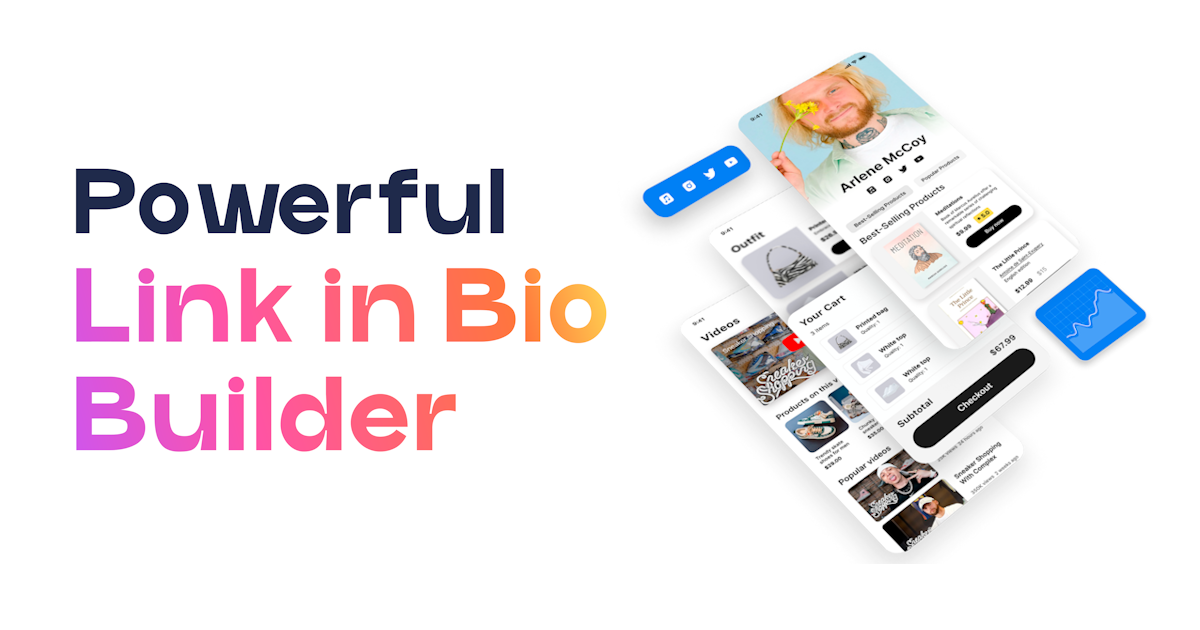
How to Use Videos in UniLink (Upload, Host, and Sell Video Content on Your Page)
Host videos directly on UniLink — no YouTube required. Add a Video block, set it as free or paid, build a course with chapters, and track every view from your dashboard.
Sharing video content typically means uploading to YouTube or Vimeo, then embedding a link that sends your audience off your page. With UniLink's built-in video hosting, your videos live directly on your profile. Viewers stay on your page, you control the experience, and you can charge for access — without setting up a separate course platform or payment gateway.
What Videos Does
UniLink's video feature handles the full lifecycle of video content: upload, hosting, delivery, monetization, and analytics. When you upload a video, UniLink stores and streams it from its own CDN. Visitors to your profile can watch it inline without leaving your page or being redirected to a third-party player.
Each video can be set to free (accessible to any visitor) or paid (requires a purchase or subscription before playback unlocks). The paid option connects directly to UniLink's built-in payment processing, so you don't need to wire up a separate checkout. For creators who sell courses, multiple videos can be grouped into a single course block with numbered chapters, a table of contents, and individual chapter titles — giving buyers a structured learning experience.
Engagement features include viewer comments, which you can enable or disable per video. View counts are tracked automatically and visible in your analytics dashboard, so you can see which videos hold attention and which get skipped. This data helps you decide what to produce more of and which titles or thumbnails to test.
How to Get Started With Videos
- Log in and open your profile editor — go to your UniLink dashboard and click Edit Profile to open the block editor.
- Add a Video block — click Add Block, scroll to the Media section, and select Video. The block appears at the bottom of your profile.
- Upload your first video — inside the Video block settings, click Upload Video and select a file from your computer. Supported formats include MP4, MOV, and WebM. UniLink processes and transcodes the file for streaming.
- Set a title and thumbnail — add a descriptive title and upload or select a thumbnail image. The thumbnail is the first thing visitors see before pressing play, so make it visually compelling.
- Choose free or paid access — in the Access settings, toggle between Free (anyone can watch) and Paid (viewer must purchase). If you choose Paid, set the price and currency.
- Enable comments if desired — scroll to the Engagement section inside the block and toggle Comments on. Viewers who are logged in will be able to leave and reply to comments below the video.
- Save and publish — click Save, then Publish. Your video is now live on your profile.
How to Use Videos
- Create a video course — in a Video block, switch the layout to Course mode. This enables a chapter list. Add each lesson as a separate chapter with its own title and video file.
- Reorder chapters — drag chapter rows up or down within the course builder to reorder lessons. The published course reflects the order you set here.
- Set per-chapter access — mark some chapters as Free Preview so visitors can watch the first lesson before purchasing the full course. The remaining chapters require payment.
- Update a video file — if you need to fix a mistake in an already-published video, open the block, click Replace Video on the relevant chapter, and upload the corrected file. The URL and purchase records stay intact.
- Check view counts — go to Analytics in your dashboard sidebar. View counts per video appear in the Content Performance section. Sort by views to identify your best-performing content.
- Moderate comments — open the Comments tab on any video to see all viewer comments. Delete spam or inappropriate posts and reply to questions to build engagement.
- Duplicate a video block — right-click a Video block in the editor and choose Duplicate if you want to offer the same video at a different price point or in a different section of your page.
Key Settings Explained
| Setting | What it controls | Best practice |
|---|---|---|
| Access: Free / Paid | Determines whether any visitor can watch or whether payment is required before playback | Set flagship content to Paid and use a short teaser clip as a free block above it to drive conversions |
| Course mode / Chapters | Groups multiple videos into a structured course with a numbered chapter list | Use Course mode for any multi-video series longer than 3 videos; single videos work better as standalone blocks |
| Free Preview chapters | Marks selected chapters as watchable before purchase, the rest stay locked | Make the first chapter free — it demonstrates value and dramatically increases purchase rates |
| Thumbnail image | The static image displayed before playback begins | Use a clear, high-contrast image with a title overlay; avoid all-dark thumbnails that look broken |
| Comments enabled | Allows logged-in viewers to post comments and replies under the video | Enable comments on free videos to build community; disable on paid videos if you prefer a cleaner experience or receive high spam volume |
How to Get the Most Out of Videos
Thumbnail quality is the single biggest lever on click-through rate. Visitors decide to press play within less than a second based on the thumbnail alone. Use a bright, focused image — ideally a close-up of a result or a clear title card — rather than an auto-generated screenshot that may land on a dark or blurry frame. Tools like Canva or even a well-lit photo on your phone produce thumbnails that stand out in a profile full of text links.
For course creators, chapter naming matters as much as video quality. "Lesson 1", "Lesson 2" tells a buyer nothing about what they're getting. "How to price your services" or "Setting up your first paid offer" communicates immediate value and helps buyers understand the course arc before purchasing. Write chapter titles that answer the question: what will I be able to do after watching this?
View count data in Analytics reveals which videos get watched to completion versus which get abandoned early. If a particular video consistently underperforms in views but is positioned early in a course, consider swapping in a more compelling free preview chapter. If a standalone video gets low views despite high profile traffic, the issue is often the thumbnail or title, not the content itself.
When selling paid video content, consider pairing the Video block with a Testimonials block directly below it. Social proof from people who've already completed the course reduces purchase hesitation for new visitors. Even two or three short testimonials placed near the video's call-to-action area measurably improve conversion rates.
Troubleshooting Common Issues
| Problem | Likely cause | Fix |
|---|---|---|
| Video upload stuck at processing | Large file size, slow upload connection, or unsupported codec | Try compressing the video to H.264 MP4 at 1080p or lower before uploading; check your internet connection; refresh and retry if processing exceeds 15 minutes |
| Paid video plays without asking for payment | You are logged in as the account owner, who always has full access | Test the paid lock by opening your profile in a private/incognito window while logged out — the paywall appears correctly for non-buyers |
| Video appears blurry or pixelated | Transcoding selected a low bitrate due to a slow upload or the source file being low resolution | Re-upload a higher-resolution source file (minimum 720p recommended); avoid re-compressing an already-compressed video |
| Comments not appearing even though enabled | Viewers are not logged in, or comments are pending moderation | Comments require viewers to have a UniLink account. Check the Comments tab in the block editor to see if posts are held for moderation approval |
Pros
- Video is hosted and streamed by UniLink — no dependency on YouTube, Vimeo, or external embeds
- Built-in paywall means you can sell video access directly from your profile without a separate platform
- Course mode with chapters gives buyers a structured experience comparable to standalone course tools
- View count analytics help you understand which content performs and guides future production decisions
Cons
- Storage quota is shared with other media — large video libraries can consume plan limits quickly
- Transcoding large files can take several minutes before the video is ready for viewers
- Comments require viewers to have a UniLink account, limiting engagement from non-registered visitors
Frequently Asked Questions
What video formats does UniLink support?
UniLink accepts MP4 (H.264), MOV, and WebM. MP4 H.264 is the recommended format because it produces the most reliable transcoding results and the smallest file size for a given quality level.
Can I offer a free trial or preview before asking for payment?
Yes. In Course mode, mark individual chapters as Free Preview. Visitors can watch those chapters without paying. Once they reach a locked chapter, they see the payment prompt. For standalone videos, you can also add a separate short teaser video block above your paid one.
How does UniLink process payments for paid videos?
Payments go through UniLink's built-in checkout, which supports major credit cards. You need to connect a payout method (bank account or supported payment provider) in your account settings before enabling paid access on any block.
Can I see who has purchased my paid video?
Yes. Go to Analytics and then the Sales or Transactions section. Each paid video or course shows a list of buyers with purchase date and amount. You can also export this data for your records.
Does UniLink count views from my own account?
Views from your own logged-in account are excluded from view count analytics to prevent inflated numbers. Test views in an incognito window to verify playback without affecting your stats.
Key Takeaways
- Videos are hosted directly on UniLink — visitors watch without leaving your profile or being sent to YouTube.
- Set access to Free or Paid per video or chapter; payment is handled natively without a third-party checkout.
- Course mode groups multiple videos into a structured chapter list — use it for any multi-video series.
- Make the first chapter a Free Preview to show value before asking for payment.
- View count analytics in the dashboard reveal which content resonates and should guide future production.
Ready to publish your first video on UniLink?
Create your free account, add a Video block, and start hosting, sharing, or selling your video content directly from your profile — no external platforms needed.
Get Started FreeCreate Your Free Link-in-Bio Page
Join thousands of creators using UniLink. 40+ blocks, analytics, e-commerce, and AI tools — all free.
Get Started Free